
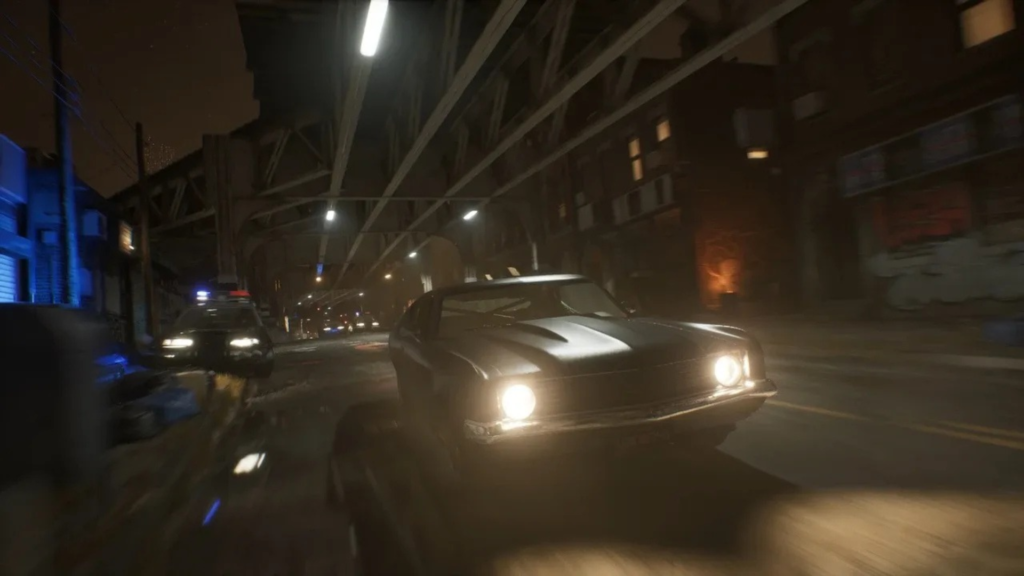
Hello everyone and welcome back to another blog post. It’s GTA 6 week so we’ll talk about some games to scratch the itch through indie games. If you’re looking for a game that lets you deeply experience the simple truth of “the one who owes money is the boss,” then Liquid Swords’ debut title Samson: A Tyndalston Story is absolutely not to be missed. This action game, led by Just Cause series creator Christofer Sundberg, launched on PC in April 2026, and just snuck onto PS5 and Xbox Series consoles on September 21st.
As a player with complicated sympathy for “midlife crisis-style entrepreneurship,” I spent over ten hours punching, dodging debt collectors, and repairing cars in the decaying city of Tyndalston, trying to figure out whether this is a tragedy dragged down by technology or an overrated nostalgia experiment.
You’re Not Playing a Game, You’re Working for the Mob
First things first: don’t be fooled by clickbait headlines that shout “GTA killer” the moment they see driving and crime. Samson’s core driving force isn’t the epic feel of gang warfare—it’s extremely personal financial suffocation. Protagonist Samson McCray owes the St. Louis crew $100,000 to make bail, and his accountant sister Oonagh is being held as collateral. The first thing you do every day when you wake up is scrape together that day’s interest (around $2,000 to $3,000 early on), or else… well, you’ll find out.
This setup is genuinely good. The game’s “Action Points” system forces you to make choices every day: you only get six action points, most missions cost two to three, and story missions don’t pay enough to cover your daily debt—you have to do side jobs. Miss payments for a few days in a row and the “Strikes” system kicks in, with debt collectors actively hunting you down to beat you up. This design tightens the screws on “intensity over scale” to the max. The few hours in the middle of the game where you’ve found a rhythm—punching someone’s clock, rushing to the next job, barely scraping together the day’s payment—genuinely capture that desperate short-term pressure.
Then the game slaps you awake.
The Combat System: Cinematic in Concept, Air-Punching in Practice
Samson’s melee combat is its most ambitious gamble. It completely abandons firearms and goes all-in on third-person brawling, with environmental interactions (smashing windows, grabbing improvised weapons) and a skill tree divided into tactics, aggression, instinct, and cunning. On paper, this should feel like Sifu meets Sleeping Dogs street brawls, with weight and consequence.
In practice, it feels like your fists are swinging through fog. Hitbox precision is inconsistent, input lag frequently turns technique into chaos, and when facing groups of enemies it’s not “desperate spatial management”—it’s “flailing while wondering if your controller is broken”. Multiple reviews point out that the combat animations and physics make the protagonist seem like he’s beating the air. The environmental interaction idea is cool, but when the core punch doesn’t connect properly, smashing a window feels less like a tactical choice and more like venting frustration.
Technical Debt: The Game Itself Is a “Strike” Event
Here’s where sarcasm becomes genuinely painful. Samson launched with 53 points on Metacritic, 49% positive reviews on Steam (mixed), and only 40% of critics recommending it. One reviewer had to restart the game twice because a broken story mission blocked progression. Another hit a soft-lock within the first two hours.
The studio Liquid Swords is reportedly bankrupt as of October 2026, with employees unpaid. This isn’t schadenfreude—it’s context. The game’s technical state isn’t the result of laziness; it’s the result of a team that ran out of runway. But from a player’s perspective, knowing why the plane crashed doesn’t make the crash landing any softer.
So Who Is This For?
If you’re the kind of player who can forgive jank for the sake of atmosphere, who finds the “daily debt pressure” loop genuinely novel, and who has a high tolerance for repetition—Samson has moments that justify the $25 asking price. The Tyndalston setting has real texture: a decaying mid-90s New Jersey stand-in built on “statement, violence, parasitic” visual pillars, with environmental storytelling that actually feels authored rather than asset-flipped.
If you need combat that feels good, missions that don’t repeat, and a game that doesn’t soft-lock you out of the story—wait for a deep sale, or just replay Sleeping Dogs.
Final verdict: Samson: A Tyndalston Story is a game about the crushing weight of debt that was itself crushed by the weight of its own development. It’s a fascinating failure, a “what could have been” that you can feel in every punch that doesn’t quite land. Play it if you’re curious about how ambition tastes when it goes sour. Skip it if you value your blood pressure.