
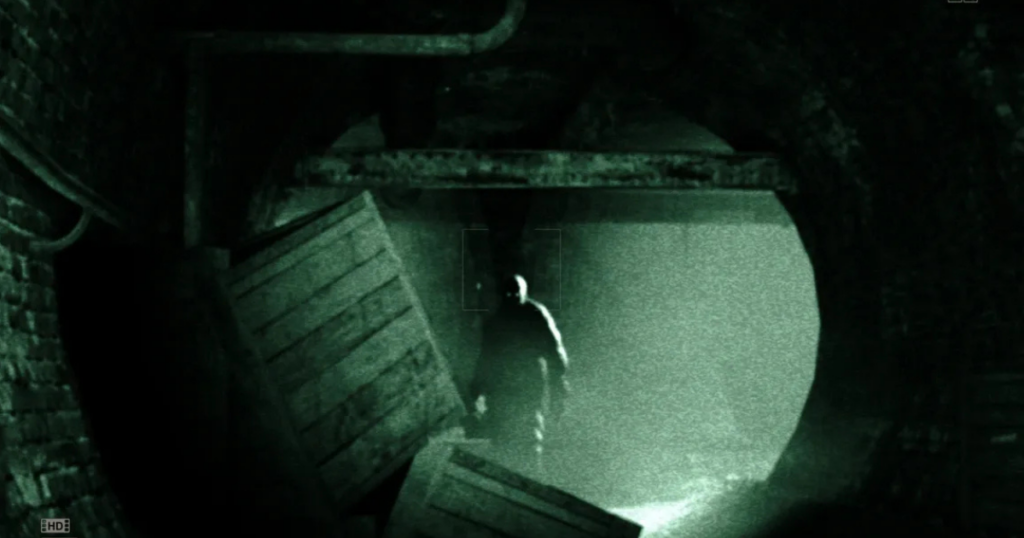
Hello everyone and welcome back to another blog post. Let’s get one thing straight: if you’re looking for power fantasies or heroic last stands, Outlast has precisely zero respect for your ego. Developed by Red Barrels, this first-person survival horror game strips you of every comforting video game convention—no weapons, no combat, just a camera with rapidly depleting batteries and an asylum full of people who really, really want to redecorate the walls with your internal organs.
Since its 2013 release, Outlast has become a benchmark for modern horror, revitalizing the “helpless protagonist” trope that games like Amnesia pioneered. But unlike its predecessors, Outlast perfected the art of psychological torture through brilliant simplicity: run, hide, or die. This guide—crafted with equal parts admiration and trauma—will dissect why this game remains terrifying over a decade later, how it spawned an ongoing franchise, and most importantly, how you might survive it (spoiler: you probably won’t).
The Core of the Terror: Embracing Utter Helplessness
The genius—and sheer audacity—of Outlast is its foundational rule: you are prey. As investigative journalist Miles Upshur, your toolkit is a camcorder and a staggering lack of common sense. This isn’t a power fantasy; it’s a submission fantasy where you willingly let the game psychologically dismantle you.
The camcorder’s night vision is your main “weapon”. That iconic green hue is your lifeline in the pitch-black halls of Mount Massive Asylum, but it’s powered by batteries you must scavenge. Running out in a dark corridor isn’t an inconvenience; it’s a death sentence. This mechanic brilliantly transforms resource management into a source of constant anxiety. You’re managing your own fear, deciding when to risk exposure in the dark versus revealing your position with that tell-tale electronic glow.
This philosophy of helplessness forces a different kind of engagement. Success isn’t about reflexes; it’s about environmental literacy and stealth. You’ll spend more time leaning around corners (yes, the game has a dedicated peek mechanic) and silently nudging doors ajar than you will in any semblance of “action”. Your ears become your primary weapon, picking up on distant muttering or footsteps on different surfaces to track enemy patrols. In a gaming landscape obsessed with empowerment, Outlast’s commitment to making you feel small, weak, and hunted is its most radical and enduring feature.
The Evolution: From Solitary Confinement to Shared Trauma
The Outlast universe has smartly evolved without diluting its core thesis. The Outlast Trials (2024) asks a brilliant question: What if your friends could also witness your humiliation?
This cooperative prequel transforms the solitary panic into a social experiment in shared vulnerability. The tension mutates from “How do I survive?” to “How do we survive each other?” Do you work together to complete objectives, or will one of you become a sacrificial lamb to distract the “Ex-Pop”? Can you coordinate when your entire team is suffering from Sanity depletion and hallucinating the Skinner Man? It’s a masterstroke that proves the core terror isn’t reliant on being alone; it’s about being powerless, a feeling that can be just as potent in a crowd.
Mastering the Madness: Timeless Survival Tips
So, you’ve decided to donate your sanity to science. Wonderful. Here’s how to marginally increase your lifespan, presented with the seriousness this endeavor deserves:
- Your Camera is Your Crutch (Literally and Figuratively): That camcorder is your eyes. Manage its battery life like you’re prepping for the apocalypse—because you are. Switch off night vision the millisecond you hit a lit area. And remember, darkness is your friend… unless it’s hiding an enemy, a trap, or the gaping maw of the unknown. Then it’s your worst enemy. Good luck figuring out the difference!
- Become a Master of Acoustics and Shadows: This isn’t a sprint; it’s a creepy, deliberate tiptoe. Use the peek and door-cracking mechanics to scout every new area. Your ears are now more important than your eyes. Listen for muttering, footsteps, and the sound of your own heart attempting to escape your chest. Pro Tip: If you hear heavy breathing and it’s not yours, you’ve already made a critical error.
- Plan Your Flops (a.k.a. Have an Escape Route): Before you flip that loud, obviously trap-like switch to progress the story, always—always—identify the nearest hiding spot or two. Your goal is to trigger the catastrophic event and then vanish like a ghost, letting the poor sap who comes to investigate wander by confused. It’s not cowardice; it’s “tactical repositioning.”
- Death is a Teacher (Except on Insane Mode): Dying is part of the process. Each death teaches you an enemy’s patrol route, a trap location, or a new existential dread. Embrace it… unless you’re playing on Insane Mode. Then, a single death sends you back to the very start with no checkpoints. Attempting Insane Mode before you know the game inside and out isn’t hardcore; it’s a voluntary psychiatric episode.
The Final Verdict: A Legacy Built on Fear
Outlast’s staying power is no fluke. In an era where games are often bloated with features, it remains a focused, punishing, and brilliantly executed concept. It understands that true horror isn’t about what you can kill; it’s about what can kill you while you’re utterly defenseless. It proves that advanced graphics don’t make a horror game—advanced psychology does.
So, as we look at the horror landscape of 2025, filled with photorealistic monsters and sprawling open worlds, sometimes the most effective scare is still the simplest: a dark hallway, the whir of a night vision camera, and the devastating realization that you forgot to check your battery level.