
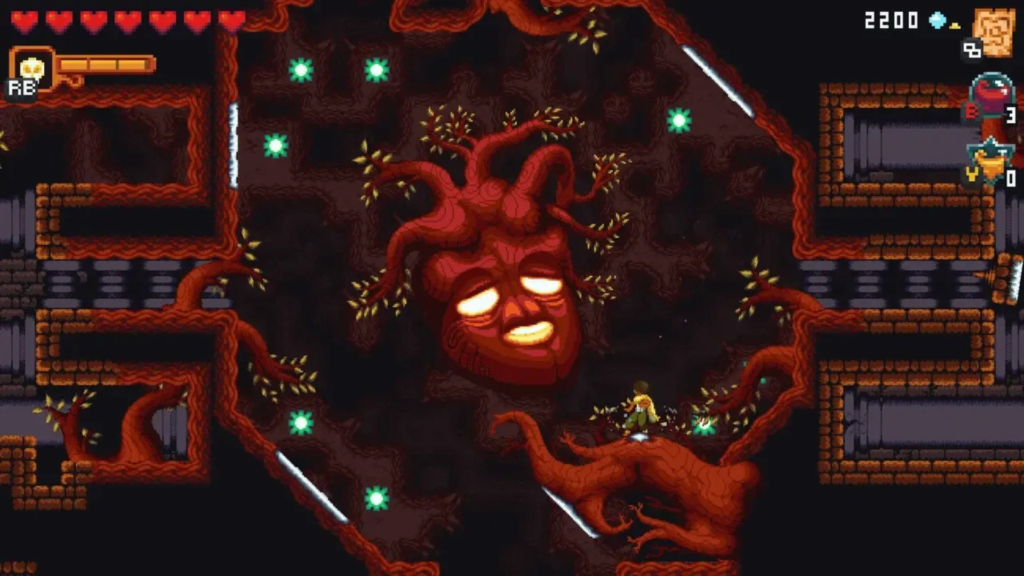
Dandara: Trials of Fear Edition is a 2D Metroidvania developed by Long Hat House and published by Raw Fury. The core gimmick? You don’t run. You don’t jump in any traditional sense. You leap between surfaces—floors, walls, ceilings—by latching onto specific points, defying gravity like gravity personally insulted your mother.
The Trials of Fear Edition adds three new areas, a new boss, new powers, new music, a secret ending, and “quality of life updates” that I assume include “fewer moments where you want to scream.” It’s generous. It’s also still Dandara.
The story follows the titular heroine, named after an Afro-Brazilian warrior from the colonial period who fought alongside the Quilombo dos Palmares. She awakens in the world of Salt to liberate its oppressed citizens. The lore is intriguing, though the narrative stays relatively minimalist compared to the environmental storytelling. You’re here for the movement, not for a Tolkien-esque epic.
The Movement: Beautiful, Fluid, and Utterly Unhinged
Here’s the thing about Dandara‘s movement system: when it clicks, it sings. You’re flinging yourself across rooms, chaining leaps, dodging projectiles, feeling like a caffeinated spider with a grudge. One player described it as “very fluid and rather pleasant” after the initial 15-minute tutorial hump. Another called it “amusing for about an hour” before it went “downhill fast.” Both are correct. Schrödinger’s game mechanic.
What nobody tells you is that the map design actively punishes you for thinking in straight lines. You want to go left? Sure, just bounce off the ceiling, latch onto a wall, ricochet off a floating platform, and consult the map three times because every room looks the same after the fifth hour. One particularly eloquent Metacritic user compared the navigation to opening an app just to get permission to walk to your kitchen. That’s not hyperbole. That’s Dandara.
And the backtracking. Oh, the backtracking. It’s a Metroidvania, so you expect some retreading. But Dandara makes you earn every inch of it, and not always in a fun way.
The Good Stuff
The art and music are genuinely stunning. Handcrafted pixel art that oozes atmosphere, paired with a soundtrack that one reviewer described as “haunting” and another as “one of the best I’ve ever heard.” The world of Salt feels alive in the way that only really good indie games manage—mysterious, oppressive, and weirdly beautiful.
Boss fights are a highlight. Multiple players note that the bosses are distinct, challenging, and satisfying to conquer. When the movement system clicks during a boss encounter, you feel like an absolute god. A very small, very confused god who just bounced off three walls to land one hit.
The Trials of Fear Edition content is substantial. Three new areas, a new final boss, expanded lore, and a secret ending for free if you already owned the base game. That’s the kind of post-launch support that deserves a slow clap, even if the base game already tested your patience.
The Not-So-Good Stuff
The learning curve is a brick wall. The first hour is going to hurt. The controls feel “weird and clunky” at first, and the game does not hold your hand. It throws you into a world where down is a suggestion and up is wherever you happen to latch next. If you don’t have the patience of a saint or the stubbornness of a Soulsborne veteran, you might bounce off—literally and figuratively.
Navigation is a chore. The map exists. You will use it constantly. Some rooms are designed to make you backtrack through multiple stages just to attempt progress, and the visual sameness of the environments doesn’t help. There’s a difference between “challenging exploration” and “where the hell am I supposed to go,” and Dandara occasionally crosses that line with a smug little smile.
The story is thin. The atmosphere is incredible. The lore is interesting in concept. The actual narrative delivery? One review called it “extremely simple,” and I’d agree. Don’t come expecting Hollow Knight levels of emotional devastation. Come expecting vibes and a lot of bouncing.
FAQ: Dandara Edition
Is Dandara: Trials of Fear Edition worth buying?
If you love Metroidvanias, atmospheric indie games, and the specific joy of mastering a bizarre movement system, yes. If you get frustrated easily and hate backtracking, maybe watch a Let’s Play first. It’s not for everyone, and that’s okay.
How long is Dandara?
Around 8 hours for a fairly complete playthrough, according to one player who finished with most of the map discovered. Speedrunners and completionists will vary.
Is the movement system actually good, or is it just a gimmick?
It’s both. It’s a genuinely innovative mechanic that’s well-exploited in the level design, but it takes time to click and the map design occasionally works against the fluidity the mechanic deserves.
Does Trials of Fear Edition add enough to justify a replay?
If you played the base game, the added areas, boss, powers, and secret ending are a solid reason to return. If you’re new, just get the Trials of Fear Edition—there’s no reason to play the original version.
Is the story good?
It’s serviceable. The atmosphere and world-building carry it more than the plot does. Don’t expect narrative brilliance, expect vibes.
Final Verdict: 7.5/10 – A Beautiful, Infuriating Gem
Dandara: Trials of Fear Edition is the kind of game that makes you glad indie developers exist. It takes a risk, commits to its weirdness, and delivers something you genuinely haven’t played before. It’s also the kind of game that will make you question your life choices at 2 AM while you’re stuck on the same room for the fourth time because you keep missing a single white dot on the ceiling.
Play it if you have patience. Play it if you love atmosphere. Play it if you’re tired of protagonists who just walk everywhere like chumps.
Just don’t say I didn’t warn you about the gravity thing.