
Hello everyone and welcome back to another blog post. The Metroidvania genre—that beautiful, sadistic fusion of exploration, ability-gated progression, and back-tracking that makes you question your life choices, your map-reading skills, and whether you passed that same glowing door three hours ago—is thriving. While AAA publishers are busy charging $70 for the “Deluxe Legacy Remastered Anniversary Edition” of a game from 2014, the indie scene is quietly dropping absolute bangers that respect your intelligence while simultaneously crushing your soul.
We’ve scoured the pixelated underbelly of Steam, Itch.io, and our own Backlogs of Shame to bring you the definitive list. These games are experiences that will make you feel smart for five minutes before you realize you missed a jump for the 40th time.
Here are the The 10 Best Metroidvania Indie Games that prove 2D isn’t dead—it’s just evolved.
1. Hollow Knight (2017)
The One That Broke Our Wrists (and Our Spirits)
Let’s get the elephant in the room out of the way. If you haven’t played Hollow Knight, what are you even doing here? Are you lost? Do you need directions to a Candy Crush blog?
Team Cherry didn’t just make a game; they created a masterclass in environmental storytelling. You are a tiny bug with a nail. You will die. A lot. You will wander into an area called Deepnest, feel your skin crawl, and immediately question every life choice that led you to this moment.
The “feel” of the movement is the gold standard here. It’s floaty enough to feel ethereal, but tight enough that when you die to the Path of Pain for the 90th time, you know it’s a skill issue, not a game issue.
Play it if: You like feeling small, insignificant, and absolutely captivated.
2. Nine Sols (2024)
The One Where Parrying Isn’t Optional, Grandma
Remember when Metroidvanias were just about jumping and shooting? Yeah, those days are dead. Red Candle Games looked at the genre and said, “What if Sekiro, but with a cat?”
Nine Sols is brutally difficult. It features a “Taopunk” aesthetic (yes, that’s a real thing, put down the thesaurus) that blends futuristic tech with ancient Eastern philosophy. The parry timing is so tight it could seal a vacuum chamber. If you go into this button-mashing, the game will laugh at you. Then it will kill you.
The deflection system here rivals anything in AAA action games. It’s punishing, precise, and oh-so-satisfying when it clicks.
Play it if: You thought Sekiro needed more map exploration and feline protagonists.
3. Blasphemous (2019)
The One That Will Get You Shushed in Church
If Hollow Knight is depression personified, Blasphemous is a Catholic guilt trip injected directly into your eyeballs. The art style, inspired by Spanish religious iconography, is grotesque, beautiful, and deeply unsettling. You will see things in this game that you cannot unsee. (Looking at you, Golden Visage.)
The combat is weighty and deliberate. You aren’t a nimble bug; you are the Penitent One, and you move like you’re carrying the sins of the world (and a really heavy sword). The worldbuilding is so specific and culturally rooted that it feels like exploring a twisted fever dream of medieval Spain.
Play it if: You want to feel holy and horrified at the same time.
4. Dead Cells (2018)
The One with Commitment Issues
Technically a “Roguelite,” but it borrows so heavily from the Metroidvania playbook (exploration, shortcuts, ability gates) that it gets a pass. Motion Twin decided that dying shouldn’t be frustrating—it should be shopping.
Every run is a new build. Every death is a lesson. The combat is buttery smooth, the pixel art is crisp, and the number of weapons is so absurdly high that you’ll suffer from analysis paralysis before you even leave the starting area.
Also worth noting: the post-launch support for this game was insane. They kept adding free DLC and updates for years. In an era where most companies charge you for a new skin, that kind of commitment deserves a round of applause.
Play it if: You have commitment issues and refuse to play the same build twice.
5. Ori and the Will of the Wisps (2020)
The One That Makes You Cry (And Look Good Doing It)
Let’s be real: Ori and the Blind Forest was a beautiful, heartbreaking experience that controlled like a slippery bar of soap. Will of the Wisps fixed the controls, added actual combat that doesn’t suck, and kept the waterworks factory open for business.
This game is so visually stunning that it often feels like playing a moving painting. The sound design, the music, the sheer weight of the narrative—it’s a masterclass. The escape sequences are choreographed better than a Broadway musical. You’ll feel like an acrobat right up until you miss a wall jump and plummet to your death.
Play it if: You need a good cry and want to feel like an acrobat.
6. Axiom Verge (2015)
The One Made by One Guy (Stop Flexing, Thomas)
Thomas Happ, a single developer, looked at the industry and said, “Fine, I’ll do it myself.” The result is a love letter to Metroid that feels both nostalgic and utterly alien.
The glitch-gun mechanic, which lets you corrupt enemies and the environment, is still one of the most unique weapons in the genre. It proves you don’t need a team of hundreds; you just need a vision, a lot of coffee, and a deep-seated hatred for your sleep schedule. If you’re an aspiring developer, playing Axiom Verge is either inspiring or deeply demoralizing. There is no middle ground.
Play it if: You love Super Metroid and want to salute a man who lost years of his life to make you happy.
7. Grime (2021)
The One Where You Are the Nightmare
Most Metroidvanias cast you as the underdog. Grime casts you as a vaguely humanoid black hole. You absorb enemies with your “living stone” head, you parry by growing (which is terrifying), and the world is a surreal, hyper-lithic nightmare.
The sound design is crunch-tastic. Every parry and absorb feels visceral. It’s a shorter, denser experience that doesn’t overstay its welcome—perfect for adults with jobs and diminishing free time. The “pull” mechanic adds a twist to combat that keeps things fresh even hours in.
Play it if: You want to be the monster for once.
8. Haiku, the Robot (2022)
The One That Isn’t Trying to Kill You (As Much)
After playing Hollow Knight and Nine Sols, sometimes you just need a hug. Haiku, the Robot is that hug. It wears its Hollow Knight inspiration on its sleeve (it’s literally a bug in a ruined world) but dials the difficulty down to “pleasant afternoon” rather than “existential crisis.”
The art is charming, the movement is snappy, and it respects your time. It’s the perfect palate cleanser between brutal 50-hour epics. Think of it as the literary equivalent of a cozy mystery novel—familiar, comforting, and exactly what you need right now.
Play it if: You want Metroidvania vibes without the Metroidvania therapy bills.
9. Ender Lilies: Quietus of the Knights (2021)
The One with Ghost Friends
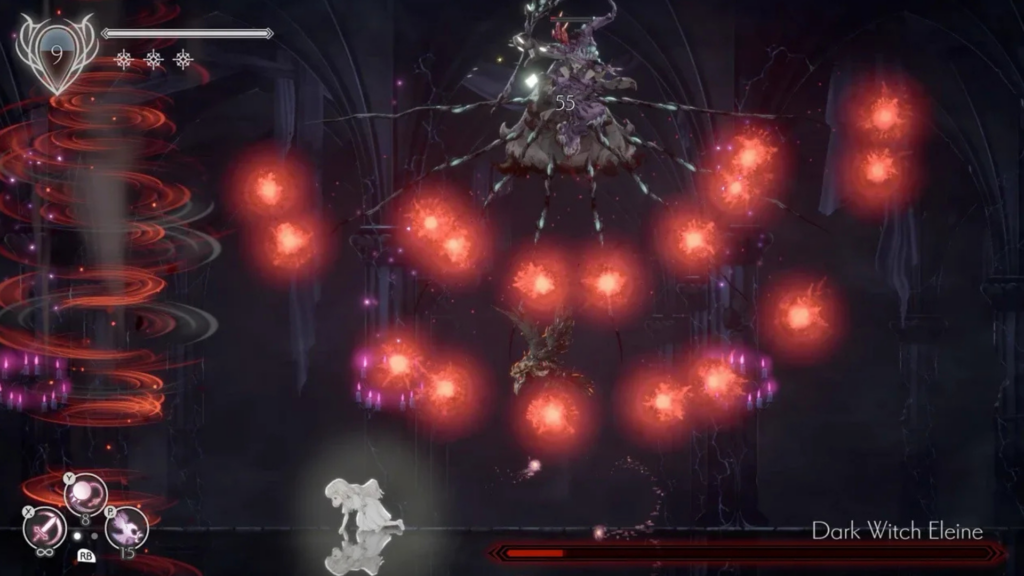
Ender Lilies asks a simple question: What if you couldn’t fight at all? You play as a tiny white-haired girl (standard protagonist issue #447) who can’t attack. Instead, you purify corrupted spirits who then fight for you. It’s a Pokémon-style collection system meets melancholic exploration.
The atmosphere is dripping with sorrow. The soundtrack? Haunting. The boss designs? Terrifying. It’s a slower, more methodical take on the genre that rewards patience and exploration. Plus, swapping out spirit loadouts keeps combat from getting stale.
Play it if: You want to collect an army of ghosts and cry about it.
10. Bloodstained: Ritual of the Night (2019)
The One Actually Made by the Guy Who Invented the Genre
Look, we had to include it. Koji Igarashi, the actual architect of the “vania” side of Metroidvania, came back to remind everyone how it’s done. Bloodstained is Castlevania: Symphony of the Night in all but name.
Is the voice acting cheesy? Yes. Is the dialogue ridiculous? Absolutely. But the sheer density of secrets, the shard system (enemy abilities), and the classic exploration loop are flawless. It’s comfort food for genre veterans. It’s not trying to reinvent the wheel; it’s reminding you why the wheel was good in the first place.
Play it if: You want to shake hands with history and also summon a chair to kill demons.
The Verdict: Go Forth and Get Lost
The Metroidvania genre is in a golden age. Whether you want to suffer (Nine Sols), cry (Ori), or just feel vaguely uneasy (Blasphemous), there’s something waiting for you. These 10 Best Metroidvania Indie Games represent the absolute best of what indie developers have brought to the table—proof that you don’t need a massive budget or a team of hundreds to create worlds that swallow you whole for hours on end.
So clear your schedule, charge your controllers, and maybe print out a map. You’re going to need it.
Now if you’ll excuse me, I have to go. I’m 80% through a replay of Hollow Knight and I just realized I lost my shade soul.
Again.
What’s your favorite Metroidvania? Did we miss one? Did we insult your precious baby? Scream at us in the comments below.