
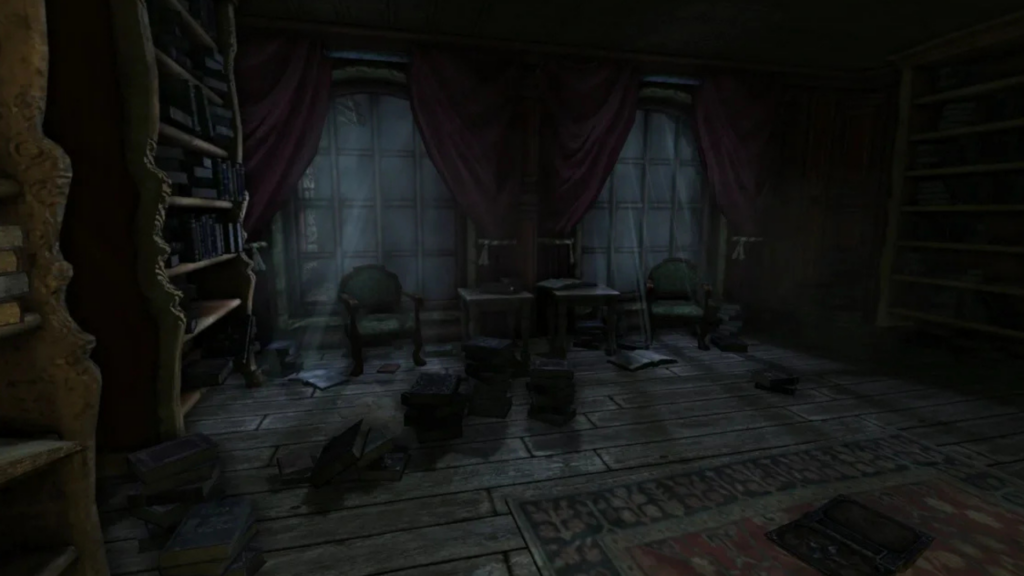
Hello everyone and welcome back to another blog post. Let’s cut the crap. You’re here because you want to read about an old game and maybe get a chuckle. So settle in, try not to think about the creaking floorboards behind you, and let’s dive into one of the most terrifying experiences in gaming history with Amnesia: The Dark Descent.
What Actually Is This Nightmare Fuel?
Amnesia: The Dark Descent is a first-person survival horror game from Frictional Games, released back in 2010 when the world was simpler and we didn’t know we’d be fighting AI for writing jobs in 2026. You play as Daniel, a chap who wakes up in a creepy 19th-century castle called Brennenburg with a bad case of “who am I, where am I, and why does that shadow look like it’s moving?”
Here’s the kicker: Daniel deliberately erased his own memory because he discovered something so horrifying that he’d rather not remember it. Smart move, Dan. Really thought that through.
The story unfolds through notes, flashbacks, and the rambling of a disembodied voice named Alexander—who, spoiler alert, is not your friend. You’re tasked with descending into the castle’s depths, solving puzzles, and eventually sacrificing a dude to stop an otherworldly being from destroying everything. Standard Tuesday stuff.
The Gameplay Loop: Hide, Cry, Repeat
The core gameplay is a masterclass in stress induction. You’ve got three main resources to manage:
1. Your Lantern (Oil) – This thing runs out faster than your will to live. You need it to see, but using it alerts monsters to your location. So you’re basically choosing between “blind and terrified” or “visible and dead.” Fun!
2. Your Sanity – When you’re in the dark too long or stare at monsters, your sanity meter drops. The screen gets wobbly, your character breathes like he just ran a marathon, and creepy sounds start playing. It’s a delightful feature that makes you feel like you’re losing your mind—which, coincidentally, is exactly what’s happening to Daniel.
3. Your Tinderboxes – These let you light candles and torches for brief moments of safety. They’re scarce, precious, and you’ll hoard them like a dragon with a gambling problem.
The “No Weapons” Rule (Because Why Make It Easy?)
Here’s the thing that sets Amnesia apart from every other game you’ve ever played: you can’t fight back.
No guns. No swords. No magical spells. Not even a rusty spoon to wave menacingly. Your only options are:
- Run – Sprint like your life depends on it (because it does)
- Hide – Cower in a closet or behind a pillar and pray the monster doesn’t check the wardrobe
- Cry – Not a mechanic, but let’s be honest, we all did it
This helplessness is the whole point. Most games make you feel like an unstoppable killing machine. Amnesia makes you feel like a scared rabbit in a castle full of hungry wolves. It’s psychological horror at its finest—or worst, depending on your tolerance for existential dread.
The Real Terror? The Sound Design
You want to know what’s scarier than the monsters? The audio.
Close your eyes and imagine: the distant echo of footsteps that aren’t yours. The groaning of ancient wood settling. A wet, guttural breathing sound coming from somewhere just behind you. Water dripping in a rhythm that feels almost… intentional.
The sound design in this game is an absolute masterpiece of dread. It’s so effective that you’ll find yourself playing with the volume on because you need to hear when a monster is approaching—but you’ll hate every second of it.
One time I played with surround sound headphones. I don’t recommend it unless you enjoy the sensation of your soul briefly leaving your body.
Who Is This Even For?
Let’s be honest—this game isn’t for everyone. And I mean that as a compliment.
If you’re the type who needs constant action, explosions, and a mini-map telling you exactly where to go, Amnesia will bore you to tears. The puzzles are old-school (read: obscure), the pacing is slow, and the graphics haven’t aged like fine wine.
But if you’re someone who appreciates:
- Atmosphere over jump scares (though there are a few of those too)
- Story that unfolds like a mystery novel
- Fear that creeps up on you rather than shouting “BOO!”
…then this game is still an absolute treasure in 2026. It redefined the horror genre and paved the way for modern classics like Outlast, Alien: Isolation, and basically anything where you can’t fight back.
User Reviews: A Beautiful Mess
The internet has opinions about this game. Let’s break them down:
The “Masterpiece” Crowd – These folks will tell you it’s the scariest game ever made, that the atmosphere is unmatched, and that the story will haunt you for years. They’re not wrong.
The “Boring” Crowd – These people found it slow, frustrating, and anti-climactic. They wanted to shoot things and were disappointed. They’re also not wrong—this game just isn’t for them.
The “I Can’t Finish This” Crowd – These poor souls got about two hours in, encountered their first Grunt (the game’s main enemy), and noped out forever. They probably sleep with the lights on now. No judgment.
Does It Hold Up in 2026?
Short answer: Yes, but with conditions.
The game is over 15 years old. The textures are blocky, the character models are stiff, and some puzzles rely on logic that only made sense in 2010. But here’s the thing—horror doesn’t age the same way graphics do.
What makes Amnesia terrifying isn’t the polygon count. It’s the anticipation. The atmosphere. The constant, gnawing feeling that something is watching you from the darkness.
If you can look past the dated visuals and embrace the experience for what it is—a slow-burn descent into madness—you’ll find a game that’s still more effective than 90% of modern horror titles.
Pro Tips for First-Time Players (Because You’ll Need Them)
- Play in the dark. Yes, it’s terrifying. That’s the point. Embrace the fear.
- Use headphones. The directional audio will save your life—or at least warn you before a monster eats your face.
- Don’t hoard oil. I know you want to, but you’ll find more. Use your lantern when you need it. The monsters can’t see you if you’re moving slowly and the light’s not directly on them. (Probably.)
- When a monster appears, DON’T look at it. Your sanity will plummet. Instead, run, hide, and wait. They’re like T-Rexes—if you stand still and don’t make eye contact, they might just wander off.
- Take breaks. Your heart rate will spike. Your palms will sweat. You’ll need to remind yourself that it’s just a game. (It’s just a game. It’s just a game. Keep telling yourself that.)
Final Verdict: Play It or Skip It?
Play it.
Even if you bounce off after a few hours, you’ll understand why this game is still discussed in hushed, reverent tones over a decade later. It’s a milestone in game design—a title that proved horror doesn’t need combat, budgets, or next-gen graphics to be unforgettable.
And if you finish it? Congratulations. You’ve survived one of gaming’s most brutal psychological tests. Now go play something cheerful, like Stardew Valley, and recover your soul.
So, did you make it through Brennenburg Castle? Or did you nope out at the first Grunt? Drop your horror stories in the comments—misery loves company, and we’re all in this together.
Now go turn on a light. You’ve earned it.