
Let’s get one thing straight: you’re not getting any younger, and November 5th—the release date for the Ocarina of Time remake on Switch 2—is still an eternity away. You could spend the next two months staring at the pre-order screen, refreshing your email for a shipping notification that won’t come, or you could actually play something.
Nintendo has a stranglehold on the “save the princess, break the pots” genre, and they know it. But here’s the dirty little secret the big N doesn’t want you to think about: indie developers have been quietly making Zelda games that often matches Zelda games for years. They just don’t have the marketing budget to remind you of that every five minutes.
So, here are ten indie Zelda-likes to keep you entertained until Link inevitably wakes up in a temple with amnesia (again). I’ve ranked these based on actual playtime, dungeon design quality, and how effectively they distract you from the fact that November is still 55 days away.
1. Tunic
Best for: When you want to feel like a genius and an idiot simultaneously.
Tunic is what happens when a developer grows up playing The Legend of Zelda and decides the manual was the best part. You play as a fox in a green tunic (subtle, right?) who wakes up on a beach with no explanation. The game hands you a fragmented instruction booklet in a language you can’t read, then expects you to figure out the mechanics through pure observation.
It’s brilliant. It’s also infuriating if you have the patience of a caffeinated squirrel. The late-game difficulty spikes will humble you, but the moment you crack a manual page that reveals a hidden mechanic you’ve been missing for hours? That’s the good stuff.
Playtime: 15–30 hours depending on how stubborn you are.
2. Death’s Door
Best for: When you want Zelda combat but with actual consequences.
You’re a crow. You collect souls. You hit things with a sword, a bow, and eventually some magic. Death’s Door doesn’t try to reinvent the wheel—it just makes that wheel sharper, faster, and significantly more likely to kill you if you dodge wrong.
The dungeons are tight, the boss fights are precision encounters that reward pattern recognition over button mashing, and the whole thing wraps up in a reasonable 10–15 hours. It’s A Link to the Past for people who grew up and got jobs but still want to feel something.
Playtime: 10–15 hours. No filler.
3. CrossCode
Best for: When you want puzzles that make you question your intelligence.
CrossCode is technically a top-down action RPG set in a fictional MMO, but the dungeon design is pure Zelda DNA. Elemental puzzles, item-gated progression, and combat that requires you to actually think about positioning rather than just spamming the attack button.
The 40–50 hour runtime means it’ll comfortably carry you through to November. Just be prepared for puzzles that make you stare at the screen for twenty minutes before the solution clicks and you feel like a moron for missing something so obvious.
Playtime: 40–50 hours. This is your November buffer.
4. Blossom Tales: The Sleeping King
Best for: When you want A Link to the Past but you’ve already played A Link to the Past seventeen times.
Blossom Tales is not subtle about its inspirations. It’s a direct love letter to the SNES Zelda era, complete with top-down perspective, sword-and-shield combat, and dungeons that follow the classic “find item, use item, beat boss” formula.
Is it derivative? Yes. Does it matter? No. It’s charming, it’s well-designed, and it costs $15. Sometimes you don’t want innovation—you want comfort food that reminds you of a simpler time when your biggest problem was figuring out how to get past the Moblins in the Lost Woods.
Playtime: 8–10 hours.
5. Hob
Best for: When you want puzzles that make you manipulate the entire world.
Hob is a beautiful, mysterious adventure where you twist, turn, and shift the landscape itself to progress. There are no words, no tutorials, no hand-holding. Just you, a strange mechanical arm, and a world that’s constantly rearranging itself in ways that are both visually stunning and mechanically clever.
It’s not a traditional Zelda-like in the sense that there are no explicit dungeons, but the puzzle-solving philosophy—observe, experiment, manipulate—is pure Zelda. The lack of narrative might bother you if you need a reason to care, but the world itself is the story here.
Playtime: 10–12 hours.
6. Oceanhorn: Monster of Uncharted Seas
Best for: When you want Zelda but you’re okay with it being a little… familiar.
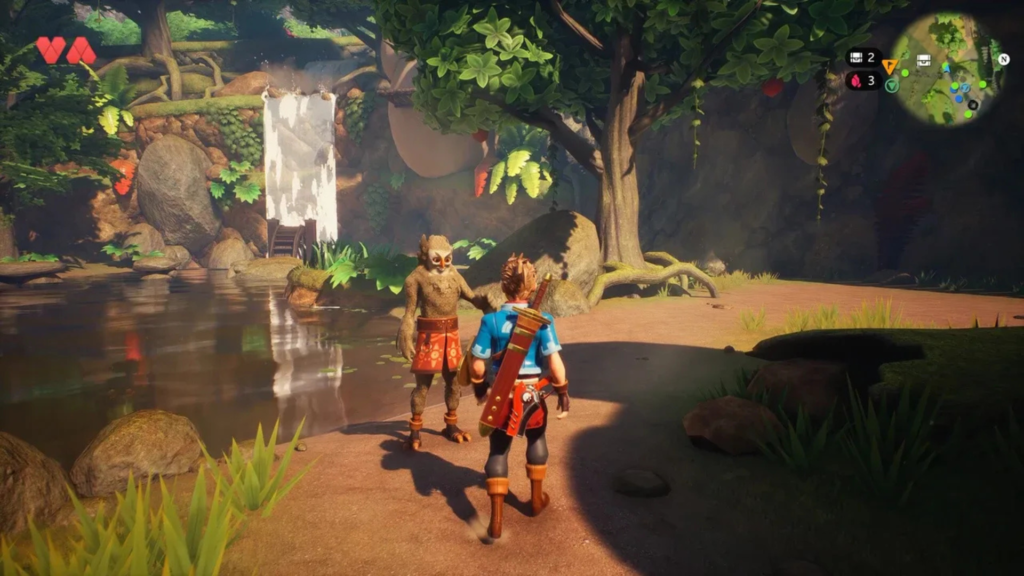
Oceanhorn is the gaming equivalent of a cover band that’s actually pretty good. It looks like Zelda, it plays like Zelda, and it has a soundtrack composed by Nobuo Uematsu (yes, the Final Fantasy guy). But it also feels like it’s going through the motions sometimes.
That said, the exploration is solid, the optional challenges add some spice, and if you’ve already played all the obvious picks on this list, Oceanhorn will scratch the itch. Just don’t expect it to change your life.
Playtime: 12–15 hours.
7. Ittle Dew
Best for: When you want a Zelda-like that doesn’t take itself seriously.
Ittle Dew asks a simple question: what if the princess solved her own problems and was also kind of an asshole about it? You play as the titular Ittle (get it?) as she explores a mysterious island, solves puzzles, and generally refuses to be the damsel everyone expects.
The game is short, funny, and surprisingly clever with its puzzle design. It’s the kind of game you play when you want to remember that not everything needs to be a 60-hour epic with a sprawling lore bible. Sometimes you just want to hit things with a stick and make jokes.
Playtime: 4–6 hours.
8. Lenna’s Inception
Best for: When you want Zelda with a glitchy, meta twist.
Lenna’s Inception starts like a normal adventure: you’re the sidekick to the great hero. Then the hero dies immediately, the world starts glitching out, and you’re left to save everyone with mild procedural generation and multiple endings.
It’s weird, it’s charming, and it does just enough differently to justify its existence. The combat is solid, the dungeons are interesting, and the whole thing has a sense of humor about itself that’s refreshing.
Playtime: 6–8 hours.
9. Hyper Light Drifter
Best for: When you want Zelda but with a side of existential dread.
Hyper Light Drifter is gorgeous, atmospheric, and deeply melancholy. You explore a ruined world, fight things that are way faster than you, and try to piece together what happened without a single word of dialogue.
It’s not a traditional Zelda-like in terms of structure, but the exploration, the sense of discovery, and the “find the thing, open the path” progression loop are all there. Just be prepared for combat that’s more Dark Souls than Wind Waker.
Playtime: 8–12 hours.
10. Eastward
Best for: When you want Zelda but you also want to feel things.
Eastward is a post-apocalyptic adventure with stunning pixel art, a touching story about a man and a girl traveling together, and dungeons that scratch the Zelda itch without feeling like a direct copy.
It’s slower-paced than most games on this list, and the story takes its time. But if you’re looking for something with emotional weight alongside your sword-swinging, Eastward delivers.
Playtime: 25–30 hours.
Honorable Mention: Prodigal
Best for: When you want Zelda but you also want to date the entire town.
Prodigal slipped under basically everyone’s radar when it launched, which is a shame because it’s doing something genuinely interesting. It takes the classic top-down Zelda formula—dungeons, items, overworld exploration—and smashes it together with a life-sim dating mechanic. You return to your hometown, reconnect with old friends (and potential romantic partners), and also spend a suspicious amount of time in caves hitting slimes with a sword.
It’s got the dungeon-crawling satisfaction of a classic Zelda game with the “who should I talk to today” anxiety of a farming sim. The pixel art is charming, the writing has genuine personality, and the whole thing has that “made by someone who really loves the genre” energy that’s impossible to fake.
Is it for everyone? No. If you’re here purely for combat and puzzle-solving, the social sim elements might feel like homework. But if you’ve ever wanted to save a kingdom and go on a nice date afterward, Prodigal has you covered.
Playtime: 15–20 hours.
The Reality Check
Look, November 5th is going to come regardless of how you spend the next two months. You could stare at the calendar, or you could play some genuinely excellent indie games that exist right now, on your current hardware, without waiting for a Switch 2 restock.
Nintendo will get your money eventually. In the meantime, these games prove that the Zelda formula isn’t just a Nintendo thing—it’s a genre that indie developers have been quietly perfecting while you weren’t looking.
So go play something. Your patience will thank you.