Hello everyone and welcome back to another blog post. Let’s be honest: most open-world games are basically fancy stress simulators. You’re constantly managing health bars, dodging enemy attacks, and trying to survive in worlds that are actively hostile to your existence. It’s exhausting.
Enter Yonder: The Cloud Catcher Chronicles, the 2017 title from Prideful Sloth that dares to ask a radical question: What if a game was just… nice? This is a comprehensive review of a game that trades combat for crafting, fear for farming, and boss battles for… well, more farming, honestly. If you’ve ever wanted the exploration of Zelda without the persistent anxiety of a Lynel spotting you from a mile away, pull up a chair. We’re diving into one of coziest gems in the open-world genre.
Game Overview: A Pacifist’s Paradise
You play as a customizable hero who, after a shipwreck, finds yourself on the shores of the beautiful island of Gemea. Instead of being greeted by a grizzled survivor warning of dangers, you learn the island is plagued by a purple, nebulous gloom called the Murk. Your mission isn’t to slay a dark lord, but to become a supernatural cleaner-upper. Armed with a growing collection of adorable Sprites (think: helpful fairy buddies), your job is to clear the Murk, restore the land, and uncover the mystery of your own past.
The core gameplay loop is refreshingly simple: explore, gather, craft, and help people. The most violent thing you’ll do is smash a barrel with a hammer. It’s the video game equivalent of a calming cup of tea—a much-needed palate cleanser in an industry saturated with high-octane, gritty adventures.
Visuals & World Design: A Walking Cartoon
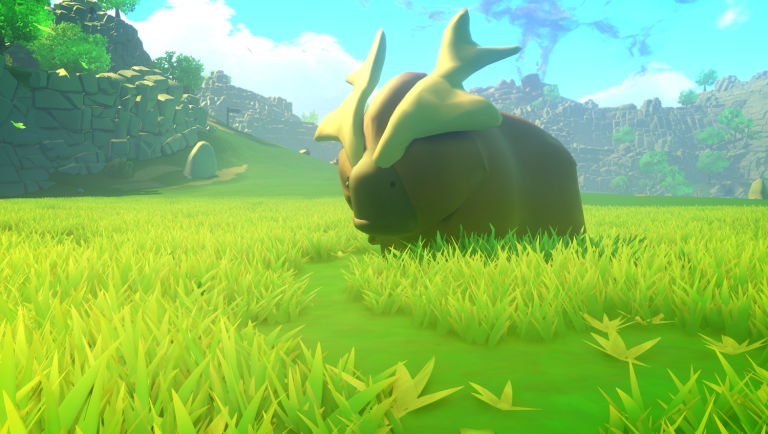
Yonder’s world is an undeniable visual treat. The art style is bright, cartoony, and heavily reminiscent of The Legend of Zelda: The Wind Waker. Rolling green hills give way to arid deserts, snowy mountains, and lush forests, all rendered in a wonderfully cohesive aesthetic that just makes you happy to look at.
The world of Gemea is divided into eight distinct biomes, each with its own visual identity, guild specialization, and resources. This ensures that exploration always feels rewarding, as turning a corner might reveal a completely new landscape. The game also features a dynamic day/night cycle and a full seasonal system where winter brings snow and summer drenches everything in glorious sun. Discovering a new area during a golden hour sunset is a genuine, unmanufactured joy.
Gameplay Deep Dive: The Cozy Mechanics
Crafting & Guilds: Your Peaceful Profession
Yonder features a surprisingly deep crafting system. As you explore, you’ll join various Guilds—like the Carpenter, Chef, and Tailor—each unlocking new recipes and skills. Want to build a bridge? You’ll need to become a novice carpenter first. The progression from gathering simple sticks and stones to crafting complex items is incredibly satisfying. Just be warned: the crafting can sometimes demand hundreds of resources, leading to what I call “Tree-Puncher’s Fatigue”. You will look at a forest and see a future lumberyard.
The Ingenious Barter Economy
In a brilliant anti-capitalist twist, Yonder has no traditional currency. Instead, you trade goods for goods. Every item has a value, and merchants will trade based on equivalent worth. The system has a clever dynamic where items are worth less in regions that specialize in them—so don’t try to trade a carrot to a master chef. It’s a system that encourages thoughtful engagement with the world’s economy, even if it sometimes devolves into dumping your entire inventory to clear bag space.
Farming & Creature Comforts
Scattered throughout Gemea are plots of land you can turn into your personal farms. Here, you can build animal pens, plant crops, and hire NPCs as farmhands to manage the cleanup. You can befriend and adopt the local wildlife—from fox-like creatures to cow-ish “Groffles”—who will then produce resources for you.
However, let’s address the Sprug-Pig in the room: the farming system feels a bit under-baked. Once you set everything up, the game essentially manages it for you. You’ll return to find your harvests magically collected in a chest. It’s low-stress, but farming aficionados used to the depth of Stardew Valley might find it lacking a sense of personal touch.
Quests, Secrets & The Pain of Travel
The inhabitants of Gemea are a needy bunch, and most of your time will be spent completing quests for them. Sadly, the majority of these are the classic “fetch quest” formula: “Bring me 10 pieces of wood and 4 pieces of cloth”. The game’s charm and the incentive to explore new areas help offset the monotony, but it’s a valid criticism.
Where Yonder shines is in its hidden secrets. There are 55 cats to find and collect across the island. Yes, you read that correctly. There are also fun seasonal events, like Halloween trick-or-treating, that make the world feel alive and dynamic.
The game’s biggest flaw, however, is its fast-travel system—or lack thereof. While there are “Sage Stones” that allow for travel, using them is a tedious process. You have to walk to a stone, enter a hub world, and then guess which unlabeled exit leads to your destination. It’s a baffling design choice that feels at odds with the game’s otherwise relaxed pace, especially when you’re just trying to deliver a single fish across the map.
Performance & The Verdict on Fun
A Mostly Serene Experience
On the technical side, Yonder is generally a smooth experience. However, some reviewers noted occasional frame rate hitches, particularly during autosaves, and one mentioned a single crash in the post-game. The controls are simple and accessible, though the character movement can sometimes feel a bit “sluggish” or “slidy,” and the physics when jumping up steep inclines can be frustratingly awkward.
Is Yonder: The Cloud Catcher Chronicles Fun?
Here’s the ultimate question, and the answer is a resounding “Yes, but…”
Yonder is a fantastic, relaxing experience for the right player. It’s a game you play to unwind, to decompress after a long day, or to simply exist in a beautiful, non-threatening space. It’s the perfect podcast game. The lack of combat, health bars, and game over screens creates a uniquely placid and serene vibe.
However, if you need constant action, deep mechanical challenge, or a gripping narrative to stay engaged, you will find Yonder “a bit too easy and hand-holdy”. It’s a game about the journey, not the destination. The main story can be completed in around 6-8 hours, but completionists can easily sink 15-25 hours into uncovering all of Gemea’s secrets.
Conclusion: The Final Verdict
Yonder: The Cloud Catcher Chronicles is not a perfect game. It has its flaws—the repetitive quests, the cumbersome travel, and the simplistic farming. But in its bold commitment to pure pacifism and serene exploration, it becomes something special.
It’s a game that values curiosity over conflict and kindness over killstreaks. In today’s world, that’s a rare and wonderful thing. It’s a cozy, charming, and utterly endearing experience that proves sometimes the bravest thing a hero can do is plant a tree and watch it grow.
Final Score: 8/10 – A Charming, Serene, and Occasionally Tedious Pacifist Paradise.
Now if you’ll excuse me, I have 27 more cats to find. And if you want to learn more, visti the game’s website here.