
Hello everyone and welcome back to another blog post. Alright, let’s talk about open worlds. You know, those sprawling digital landscapes where you can spend 200 hours collecting 500 feathers for a slightly fancier hat, all while ignoring the actual “save the world” plot? Yeah, those. While the big studios are busy making maps the size of small planets (with the content density of a desert), the indie scene is quietly building worlds that feel alive, handcrafted, and genuinely surprising.
Forget the bloated checklists. This list of the Top 10 Open World Indie Games is for players who believe exploration should be about wonder, not work. We’ve combed through the most anticipated indie releases and hidden gems of 2026 to find open worlds that prioritize atmosphere, player freedom, and pure, unadulterated creativity over sheer square mileage.
Here are the top 10 open world indie games that are actually worth getting lost in.
1. Demon Tides
Vibe: If Super Mario Odyssey went on a punk rock sailing trip.
Release: February 19, 2026.
Let’s kick off with a sequel that’s not afraid to change the tide. Demon Turf was a brilliant 3D platformer, but its successor, Demon Tides, dives headfirst into the open-world genre. You explore a vibrant, ocean-spanning world by transforming between different forms—each granting new movement abilities to access hidden islands and secrets.
The demo alone showed off a movement system so fluid and expressive that skilled players were posting leaderboard runs that looked like pure, unadulterated magic. It’s a massive playground built for the sheer joy of movement and it’s the perfect antidote to those painfully realistic AAA games where your character gets winded after a 10-second sprint.
2. Streets of Rogue 2
Vibe: A anarchic, systemic sandbox where you can topple a government by… farming?
Release: 2026.
The first Streets of Rogue was a chaotic, top-down gem about causing mayhem in a destructible city. The sequel is blowing that concept up to a vast, randomly generated open world where the mantra is “freedom and fun dialed up to 11”.
Want to fight, sneak, hack, or talk your way through problems? Go ahead. But you can also farm, build, steal, or just become a peaceful (or not-so-peaceful) settler. The goal is to topple a corrupt president, but how you get there—solo or with friends—is a madcap experiment in emergent storytelling. It’s the ultimate “what if I just…” simulator.
3. Hollow Knight
Vibe: Depressed bug explores even more depressing underground kingdom, makes friends (optional)
Released: 2017
Technically a “Metroidvania,” sure. But Hallownest is so vast, so interconnected, so willing to let you wander completely off the intended path, that calling it anything less than an open world feels like splitting hairs made of void.
The map is not your friend. You have to find the mapmaker, Cornifer, whose humming serves as a lifeline in the claustrophobic tunnels. Even then, your map remains frustratingly blank until you sit on a bench and update it—a design choice that initially annoyed me until I realized it was brilliant. You have to earn your sense of direction.
The world of Hallownest tells its story through architecture, enemy placement, and the quiet tragedy of NPCs slowly going insane. No quest markers. No quest log. Just you, your nail, and the creeping realization that this “cute bug game” is actually a meditation on decay, duty, and the futility of trying to reclaim a glorious past.
Also, the Grimm Troupe DLC goes unreasonably hard. That accordion intro lives rent-free in my nightmares.
Play this if: You enjoy getting lost, dying repeatedly, and feeling genuinely accomplished when you finally figure out where the hell you’re supposed to go.
4. Garbage Country
Vibe: Mad Max meets inventory management in a handcrafted wasteland.
Release: 2026 (Q2 target).
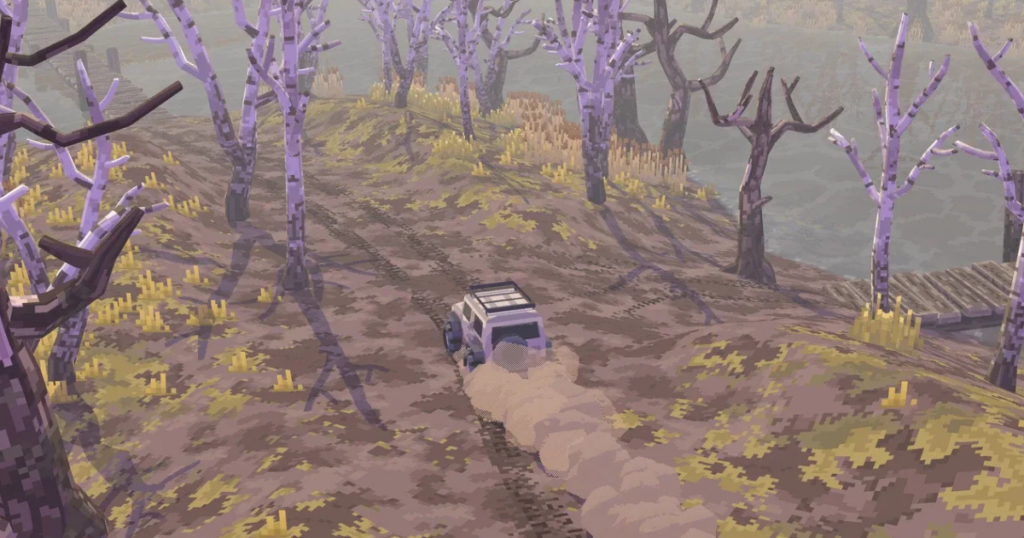
Not all open worlds are lush and inviting. Garbage Country is a post-apocalyptic exploration sim from the creator of Kingdom: New Lands and Cloud Gardens. You drive across a uniquely handcrafted wasteland, managing your inventory and upgrading your car to delve deeper into the dust-covered ruins.
The twist? You’ll also need to repel waves of enemy bots in tense tower-defense battles. It’s a compelling mix of quiet, melancholic driving, strategic resource management, and sudden bursts of action—a niche that only an indie would dare to combine.
5. Stardew Valley
Vibe: Escape corporate hell, develop crop-related carpal tunnel
Released: 2016
Developer: ConcernedApe (one guy. One guy.)
One man coded this entire game over four years, and it’s better than 90% of farming sims produced by actual studios with actual budgets and actual deadlines.
Pelican Town is small by open world standards. You can traverse it in a few in-game minutes. But its density of meaningful interactions puts AAA open worlds to shame. Every NPC has a schedule, preferences, and secrets. The valley changes with seasons. Your actions actually matter—clear-cut the forest? Joja Mart moves in. Restore the community center? You’ve literally saved local capitalism from corporate capitalism.
Also, you can marry a depressed alcoholic who lives in a trailer, help him quit drinking, and build him a greenhouse. Tell me Red Dead Redemption 2 lets you do that.
Play this if: You’ve ever fantasized about abandoning your responsibilities to live off the land. (You have. We all have.)
6. The Witness
Vibe: Mysterious island, line puzzles, philosophical crisis about the nature of perception
Released: 2016
Developer: Thekla, Inc. (Jonathan Blow)
Calling The Witness an “open world” feels reductive, but technically accurate. You’re on an island. You can go anywhere from the start. Nothing stops you from wandering into areas you’re completely unprepared to understand.
The puzzles are all variants of “draw a line from start to finish.” This description does not prepare you for the layers of conceptual depth. The environmental puzzles—mazes hidden in shadows, patterns in tree branches, the way light hits certain surfaces—transform the island itself into one giant, interconnected brain-teaser.
There are no NPCs. No narrative hand-holding. The game’s thesis, delivered through audio logs and optional video lectures, essentially argues that understanding requires effort and that most media doesn’t demand enough of its audience. It’s pretentious. It’s also completely correct.
Play this if: You enjoy feeling simultaneously brilliant and completely inadequate.
7. Over the Hill
Vibe: The ultimate, chill off-roading simulator with friends.
Release: 2026.
Sometimes, the joy of an open world is simply the feel of the vehicle you’re in. Over the Hill captures the golden age of off-roading, letting you drive iconic vehicles from the 60s to 80s through stunningly rugged landscapes.
It’s a game about the journey, not the destination. Whether you’re navigating challenging trails solo or with friends, it offers a uniquely peaceful and tactile exploration experience.
8. Neverway
Vibe: A life sim RPG that slowly peels back into a psychological nightmare.
Release: 2026.
Neverway starts as a familiar indie premise: quit your dead-end job and start over on a farm. But it quickly reveals its darker, weirder heart. You become the immortal herald of a dead god, and your peaceful life sim slowly shifts into a nightmarish RPG where you must fight through horrors.
The “open world” here is the duality of this experience—the cozy, social town life and the terrifying, unknown depths you must eventually explore. It’s a masterclass in genre-blending that keeps you constantly guessing about what’s around the next corner.
9. Romestead
Vibe: Valheim meets Roman history in an 8-player survival sandbox.
Release: 2026.
Romestead asks a brilliant question: What if Rome never fell, and you had to rebuild its civilization from scratch with your friends? This 1-8 player action-adventure survival game lets you fight, build towns, farm, and earn favor with the Roman gods.
It takes the beloved survival-crafting formula and layers on a rich historical (and mythological) theme. The open world is your canvas for construction and conquest, promising the kind of emergent, community-driven stories that make the genre so compelling.
10. Replaced
Vibe: A 2.5D cinematic thriller in a dystopian America.
Release: March 12, 2026.
Replaced has been haunting trailers since 2021 with its stunning, rain-soaked pixel art and noir atmosphere. Finally launching in 2026, you play as R.E.A.C.H., an AI trapped in a human body, navigating a dark, alternate futuristic 1980s America.
While its 2.5D perspective might seem more linear, its world is built for cinematic exploration. It blends fluid combat, platforming, and a heavy narrative drive within environments that feel densely packed with story and style. It proves that an open world isn’t defined by a compass on your HUD, but by the depth and intrigue of the space you inhabit.
Honorable Mentions & Timeless Indie Worlds
The beauty of the indie scene is its incredible backlog. While you wait for 2026’s releases, these masterclasses in open-world design are always worth revisiting:
- Terraria: The ultimate “one more day” game, where the world is a sandbox of creativity and community.
- Subnautica: One of the most terrifying and beautiful open world ever crafted, where the core gameplay loop is the sheer terror of exploring deeper.
Why Indie Open Worlds Hit Different
The Top 10 Open World Indie Games above share something that AAA open worlds rarely achieve: restraint.
They don’t throw icons at you because they trust you to find interesting things yourself. They don’t pad runtime with fetch quests because they respect your time. They don’t hold your hand because they know that getting lost is sometimes the point.
The indie space understands that an open world isn’t measured in square kilometers. It’s measured in questions per minute. How many times do you look at something and think, “What’s that? Can I go there? What happens if I—”
That curiosity, that genuine wonder, is what these games offer. Not maps to clear. Not checklists to complete. Just worlds to exist in, on your own terms.
What indie open world absolutely consumed your life? The one you started at 8 PM and suddenly it’s 4 AM and you’ve somehow memorized the spawn patterns of every enemy in the Forgotten Crossroads? Drop it in the comments—I need to add to my backlog like I need a hole in the head, but here we are.