Hello everyone and welcome back to another blog post. The best walking simulators and narrative adventures prove a simple, brilliant truth: sometimes, the most powerful stories aren’t those you’re told, but those you discover. These games slow down the pace, exchange frantic action for quiet contemplation, and often leave you staring at a credits sequence feeling profoundly understood.
Based on critical acclaim, player love, and pure creative audacity, here are The 10 Best Walking Simulator & Narrative Adventure Games, delivered without a table in sight.
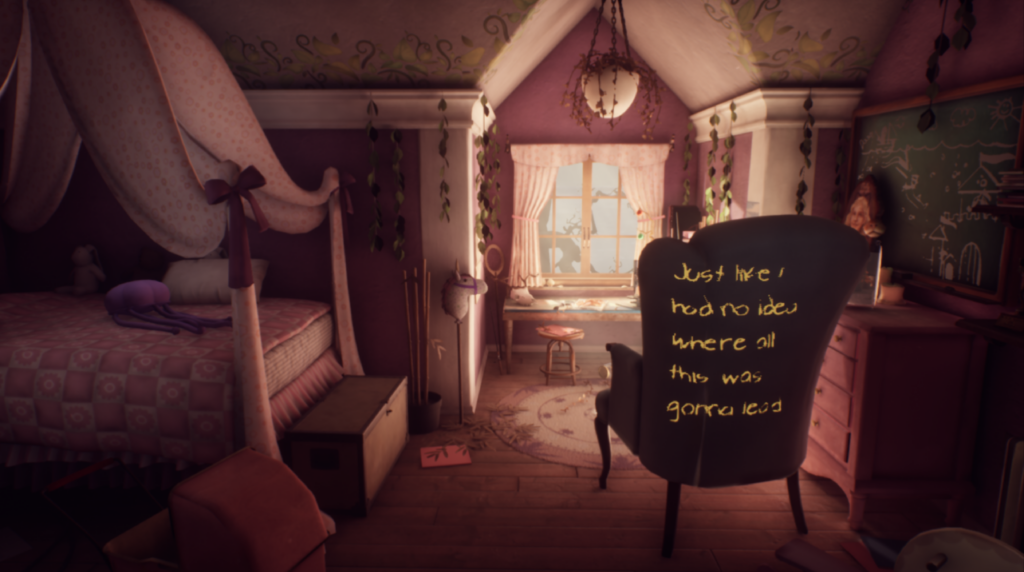
To call this a “game about exploring a house” is like calling a library a “room full of paper.” You return to the Finch family home to unravel a series of tragic, magical tales, each told through a unique and inventive gameplay vignette. It’s a masterclass in interactive storytelling that will stay with you for years.
2. Firewatch (2016)
Set in the vast, gorgeous wilderness of Wyoming, you play as Henry, a fire lookout whose only human connection is a voice on a walkie-talkie. What starts as a quiet summer job spirals into a gripping personal mystery. It’s a story about isolation, connection, and the secrets we keep in the woods.
This is the walking simulator for people who think walking simulators are silly, and for people who take them too seriously. A hilariously meta deconstruction of game narratives, choice, and free will, it constantly subverts your expectations. The “Ultra Deluxe” edition is the definitive version, packed with new content and existential dread.
4. Before Your Eyes (GoodbyeWorld Games)
The Pitch: A life story told one blink at a time. This is the most mechanically unique game on this list. It uses your webcam to track your blinks. You play as a soul on the ferry to the afterlife, reviewing your life from childhood onward. To move forward through your memories, you must blink. The act is simple, but its effect is profound. It forces you to miss moments, to rush past precious seconds, mirroring the fleeting nature of life and memory itself. It’s a short, breathtakingly creative experience that will leave you emotionally wrecked in the best way possible. A true testament to how indie games use simple tech for profound storytelling.
5. Gone Home (The Fullbright Company)
Arriving at your family’s new, empty home in the middle of a stormy night in 1995, you find a note from your younger sister saying she’s gone. From there, you simply explore. You piece together the family’s secrets not through cutscenes, but through the environment—scattered notes, hidden mixtapes, arranged objects on a dresser. It’s a masterclass in environmental storytelling and intimate, personal narrative. While its gameplay is the simplest on this list, its influence is massive, proving that exploration and curiosity could be the primary drivers of a powerful story
The Pitch: Retro-futuristic sci-fi where you’re a tiny speck in a vast, cosmic mystery. Based on Stanisław Lem’s classic novel, you play as a scientist who wakes up stranded on the alien planet Regis III. Armed with a trusty rover and analog-looking tools, you must find your crew while uncovering the fate of a previous mission. The game nails the “atom-punk” aesthetic of 1950s sci-fi and trades action for a slow-burn, philosophical sense of awe and dread. It’s a thinking person’s adventure, more about survival of the mind than the body, and a brilliant example of the genre expanding into hard sci-fi.
7. Road 96 (DigixArt)
The Pitch: A procedurally-generated road trip to freedom, where every hitchhiker has a story. In a fictional, authoritarian nation, you play as a series of teenagers all trying to flee across the border to the promised “Road 96.” Each run is a unique journey where you meet a cast of colorful, intertwining characters, make snap decisions, and try to scrounge up enough cash for the next bus ride. The genius is in how your small interactions build a larger political narrative and lasting bonds. It’s a vibrant, rebellious, and surprisingly uplifting game about hope, freedom, and the people you meet along the way.
8. The Forgotten City (Modern Storyteller)
The Pitch: A groundhog-day murder mystery in an ancient Roman city. What begins as a simple archaeological dig throws you 2,000 years into the past, into a city with one golden rule: if one person sins, everyone dies. When the rule is inevitably broken, you’re sent back to the start of the day, tasked with solving the mystery and breaking the cycle. It brilliantly combines the exploratory nature of a walking sim with the deductive puzzles of a time-loop mystery. Your knowledge is your greatest weapon, and the multiple, wildly different endings are deeply satisfying rewards for your curiosity.
9. Dear Esther (The Chinese Room)
The Pitch: The melancholic, poetic granddaddy of the genre. Originally a mod that helped define what a “walking simulator” could be, you explore a desolate Hebridean island while a narrator reads fragments of letters to a woman named Esther. There are no puzzles or traditional goals—just you, a stunning environment, and a fragmented, lyrical story you must piece together in your own mind. It’s a meditative, somber, and beautifully lonely experience. It’s more of a tone poem than a conventional game, and it remains a landmark title for its sheer commitment to mood and atmosphere over interaction.
10. Eastshade (Eastshade Studios)
The Pitch: You’re a traveling painter, not a warrior, in a peaceful open world. In the lush, vibrant world of Eastshade, you arrive as a painter with a simple goal: see the sights and capture them on canvas. You explore towns, help quirky locals with their problems (by painting specific things for them), and soak in one of gaming’s most genuinely pleasant and peaceful worlds. It’s the ultimate anti-stress game. It proves that exploration and creativity can be compelling gameplay loops all on their own, offering a heartfelt, conflict-free adventure that feels like a warm blanket for the soul.
Defining the Genre
Despite the sometimes-dismissive label, these games share a clear DNA. At their core, they are story-first experiences that prioritize exploration, atmosphere, and emotional impact over traditional gameplay challenges like combat or complex puzzles. They often use environmental details—a discarded letter, an arranged room—to tell their story, trusting you to be an investigator rather than a passive listener.
The genre is also incredibly diverse. You’ll find psychological horror (Layers of Fear), peaceful painting expeditions (like Eastshade), surreal comedy (The Stanley Parable), and contemplative sci-fi (The Invincible). Whether you want your heart warmed, broken, or startled out of your chest, there’s a walking simulator that fits the mood.
Why “Walking Simulator”?
The term started as a slight against games with minimal “traditional” gameplay. Ironically, the community and developers reclaimed it. Now, it’s a useful, if broad, shorthand for a specific kind of narrative-driven experience. Think of it less as an insult and more as a genre tag—like “first-person shooter,” but for stories you walk through.
Choosing Your First Step
If you’re new to these games and wondering where to start, ask yourself what kind of story you’re in the mood for:
For a short, unforgettable masterpiece: Start with What Remains of Edith Finch (2-3 hours).
For a mysterious, character-driven drama: Choose Firewatch (4-5 hours).
For clever, fourth-wall-breaking humor: Dive into The Stanley Parable.
For a blend of cosmic horror and human resilience: Try Still Wakes the Deep.
For a coming-of-age mystery steeped in ’90s nostalgia: Pick up Lost Records: Bloom & Rage.
So, the next time you need a break from the noise, pick one of these indie gems. Take a deep breath, press “W,” and let a good story carry you away, one step at a time. Your trigger finger could use the rest. If you want to check some of these titles out, make sure to visit the Steam store here, the gog.com store here, and/or Fanatical here.