
Hello everyone and welcome back to another blog post. Let’s face it: for years, the video game heroine playbook was thinner than a prop pizza box. Your choices were “stoic warrior in impractical armor” or “damsel with a conveniently timed scream.” Thank goodness the indie scene looked at that sad state of affairs, muttered something unprintable, and decided to write a whole new book. They gave us protagonists who aren’t just strong—they’re anxious, grieving, sarcastic, gloriously messy, and profoundly human.
Forget saving the world from generic alien overlords; these women are busy saving their friends, their own sanity, and occasionally, the very concept of reality. So, put down that triple-A title with the gruff space marine and join us as we rank the 10 best female protagonists in indie games. We’re using a strict, scientifically dubious scale of character depth, narrative gut-punches, and the quality of their withering stares (or in one case, the quality of her silent, judging crystal companion).
10. Hat Kid (A Hat in Time) – The Galactic Tourist with an Attitude
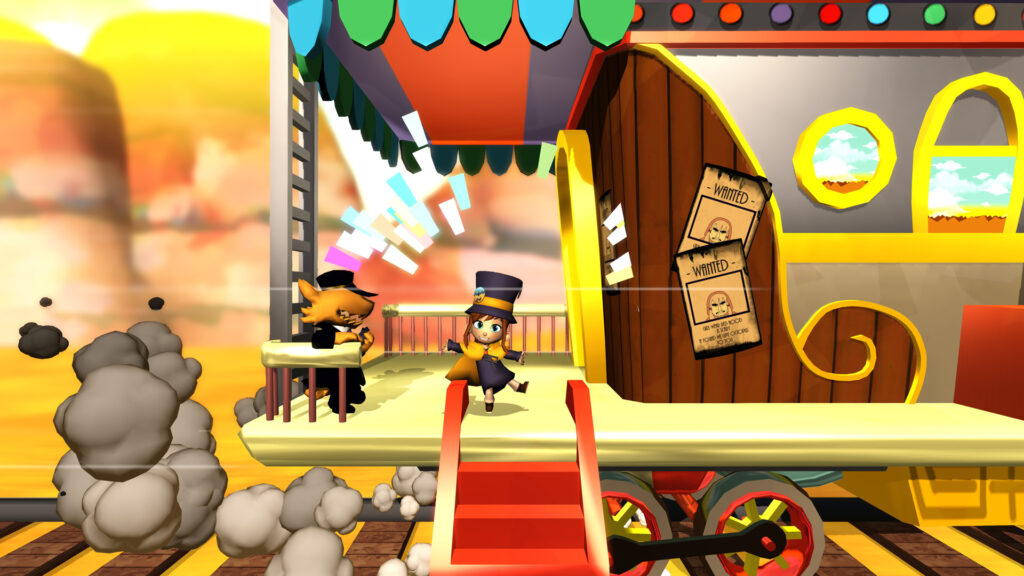
Let’s start with a truth bomb: you don’t need a tragic backstory to be iconic. Sometimes, all you need is a spaceship, a magical top hat, and the unshakable confidence of a toddler who just found your car keys. Hat Kid is a pint-sized force of chaos whose primary motivation is retrieving her lost Time Pieces, and she treats every mafia boss, undead director, and interplanetary bird law enforcer with the dismissive annoyance of someone who’s been offered store-brand soda.
While she doesn’t speak, her expressive animations scream volumes. She doesn’t tell you she’s done with your nonsense; she taps her foot, puts her hands on her hips, and makes it clear she has better, more sparkly places to be. In a genre saturated with stoic heroes, Hat Kid is a sassy, joyful reminder that heroism can be fueled by pure, unadulterated whimsy and a healthy sense of entitlement.
9. Alex (Oxenfree) – The Queen of the Teenage Eye-Roll
Stepping onto Edwards Island, Alex already radiates the world-weariness of a 30-year-old who’s just filed their taxes. She’s the quintessential troubled teen—sharp, rebellious, and carrying a backpack of guilt so heavy it could sink the ferry she arrived on. As you guide her through a supernatural mystery, your dialogue choices let you shape her from a defensive, sarcastic kid into… well, a slightly less defensive, still very sarcastic young adult.
Alex’s wit isn’t just for show; it’s her primary defense mechanism against grief, awkward social dynamics, and literal, chatty ghosts. The game lets you decide whether to lean into her prickly exterior or gently chip away at it. She’s a masterclass in writing a realistic, flawed character who you desperately want to protect, even as she’s pushing everyone away with a perfectly timed, scathing remark.
8. The Crew of the Tacoma (Tacoma) – Neurosis in a Vacuum
Fullbright’s Tacoma is brilliant because your character, Amy Ferrier, is mostly an auditor. The real protagonists are the six stranded crew members—including several compelling women—whose lives you piece together through augmented reality recordings. You meet them in the aftermath of a disaster, unraveling their friendships, romances, and simmering conflicts over corporate coffee rations.
Their strength isn’t in combat stats or chosen-one narratives; it’s in their painfully relatable normalcy. They’re engineers, medics, and managers dealing with bureaucracy, personal ambition, and the profound weirdness of being utterly alone together in space. They’re heroes because they try to care for each other, often while failing spectacularly at basic human communication. It’s a poignant reminder that leadership often looks a lot like just trying not to panic while the oxygen levels drop.
7. Mae Borowski (Night in the Woods) – Prophet of Apathetic Dread
Mae Borowski is the patron saint of millennial (and let’s be real, Gen Z) existential dread. She’s a college dropout who returns to her dying Rust Belt hometown, armed with a bass guitar, crippling anxiety, and a delightful inability to function as an adult. She spends her days hanging out, committing petty vandalism, and having conversations so sharply written they could cut through the town’s pervasive sense of despair.
Mae’s “power” is her unflinching, hilarious honesty about her own mental state. She doesn’t have a grand quest to save the world; she’s trying to figure out why everything feels so pointless, all while accidentally uncovering a literal conspiracy in the woods. Her journey is a masterful blend of the deeply personal and the strangely cosmic, proving that sometimes, saving your town from a subterranean cult starts with just getting out of bed and complaining about it over cheap pizza with your friends.
6. Eshe (Sundered) – The Girl Who Made a Deal with the Devil (And Regretted the Fine Print)
Ah, Eshe. Thrust into a nightmarish, ever-shifting cavern by shadowy tentacles, her story is less about finding herself and more about deciding what to become. Her guide is the Shining Trapezohedron, a sentient crystal that is so obviously, hilariously evil it might as well have “I AM GOING TO BETRAY YOU” flashing in neon across its facets. It’s the ultimate toxic relationship: it gives you god-like powers while casually suggesting you sacrifice your humanity to get them.
Eshe is a silent protagonist, which makes her journey of corruption or resistance all the more powerful. Will you let the creepy crystal “corrupt” your abilities for flashy, monstrous power, or will you destroy the shards and cling to your fragile humanity with worse stats? The game doesn’t judge, but your snarky, eldritch “friend” certainly will. In a landscape of introspective indie darlings, Eshe’s struggle is a brutal, beautiful, and hand-drawn action-horror spectacle about the cost of power and the existential terror of taking life advice from a glowing rock.
5. Red (Transistor) – The Strong, Silent Type (Literally)
In a city being systematically erased by a robotic Process, Red, a famous singer, has her voice stolen in the opening act. What’s her response? Does she weep? Does she hide? Please. She picks up a giant talking sword (who thankfully does enough talking for both of them) and decides to fix the problem herself.
Red redefines silent protagonism. Her lack of voice isn’t a limitation; it’s her defining trait and her motivation. Every swing of the Transistor, every tactical decision in the game’s ingenious combat system, is an expression of her grief, rage, and unwavering will. She communicates through haunting, wordless songs and the determined set of her jaw. She’s a stunning visual icon and a testament to the idea that actions—especially those involving a reality-altering sword—speak infinitely louder than words.
4. Miriam (Bloodstained: Ritual of the Night) – The Gothic Power Fantasy We Didn’t Know We Needed
In a sea of protagonists battling their inner demons, Miriam is refreshingly focused on battling the outer, more literal, and significantly uglier ones. Cursed with demonic crystals slowly consuming her body, she awakens from a decade-long sleep to do one thing: storm a gargantuan, demon-infested castle. Does she angst about it? A little. But mostly, she gets to work stylishly murdering everything in her path with a vast arsenal of weapons and stolen magical powers.
Miriam is here for the player who misses the sheer, unapologetic coolness of classic gothic action. She’s elegant, powerful, and driven by a personal mission that doesn’t require a therapy session every five minutes. She’s a reminder that sometimes, empowerment is simply looking incredible while kicking unbelievable amounts of monster butt.
3. Hornet (Hollow Knight: Silksong) – The Princess Who Will Save Herself, Thank You Very Much
Hornet first captured our hearts as the formidable, needle-wielding guardian of Hallownest. She was the antithesis of a damsel in distress—a regal, lethal protector who tested the Knight’s worth and spoke in cryptic, boss-woman pronouncements.
Hornet earns a top spot on sheer promise and undeniable presence. Her solo adventure in the haunted kingdom of Pharloom expands on her as a ruler, a warrior, and a complex figure burdened by duty and legacy. She is the embodiment of fierce, uncompromising capability, and the entire gaming world is collectively holding its breath (and its money) for her to finally take the stage she owns.
2. Madeline (Celeste) – The Girl Who Fought a Mountain (And Her Own Brain)
Madeline’s adversary isn’t a dragon or a god. It’s Celeste Mountain itself, a brutal, ever-shifting platforming gauntlet that serves as the pixel-perfect metaphor for her struggle with anxiety and self-doubt. Her journey to the summit is one of the most raw, honest, and uplifting portrayals of mental health in any medium.
What makes Madeline extraordinary is her profound relatability. She’s determined but terrified, hopeful but constantly overwhelmed. The game doesn’t magically cure her; it forces her to confront, argue with, and ultimately accept the parts of herself she hates. Her triumph isn’t just about reaching the peak; it’s about every single time she grabs a ledge after a heartbreaking fall. It’s a quiet, digital act of incredible courage that makes you cry, cheer, and maybe even believe you can climb your own mountain.
1. Stella (Spiritfarer) – The Ferrywoman to the Great Beyond (and Your Feelings)
Topping our list is Stella, the gentle, compassionate heart of Spiritfarer. In an industry obsessed with power fantasies, Stella offers a different, more profound kind of strength: emotional labor. Her job isn’t to fight or conquer, but to care. As the Spiritfarer, she ferries the deceased to the afterlife, tending to their final needs—cooking them meals, building them homes on her boat, and giving them hugs until they are ready to say goodbye.
Stella listens, she nurtures, and she has the difficult courage to let go. The game slowly reveals her own personal journey, tying her past to the spirits she helps. She teaches us that true heroism can be found in empathy, patience, and the quiet dignity of helping others find peace. For redefining what a video game protagonist can and should be, Stella isn’t just one of the best on this list—she’s an essential, healing experience in a world that desperately needs it.
The Takeaway: Heroism Isn’t a One-Size-Fits-All Helmet
So, what’s the grand, unifying thesis after touring this gallery of glorious weirdos? It’s that the indie scene has completely dismantled the old, dusty trophy case for “Strong Female Character” and built a sprawling, chaotic, and much more interesting museum in its place.
Forget the monolith. There is no single blueprint. Strength can be Stella’s bottomless empathy as she hugs a ghost, Madeline’s white-knuckled grip on a mountain ledge, or Miriam’s stylish, crystal-powered rampage through a castle. It can be the collective, bickering resilience of the Tacoma crew or the silent, world-ending fury of Red. It can even be the corruptible, player-determined path of Eshe, who reminds us that power is a choice with consequences.
These protagonists prove that the most compelling stories aren’t about saving the world, but about saving yourself, your friends, or just making it through another day with your sanity (mostly) intact. They grapple with anxiety, grief, duty, and the mundane horrors of late capitalism, all while being sarcastic, vulnerable, angry, joyful, and profoundly real.
The future of gaming isn’t about checking a diversity box; it’s about this endless, exciting variety. It’s about giving a platform to heroines who are as complex, flawed, and spectacular as the players controlling them. So, the next time you boot up a game, ask yourself: what kind of strength do I need today? The indie pantheon has you covered—no power tools required.