
Hello everyone and welcome back to another blog post. In an industry where blockbuster games often have credits longer than a Tolstoy novel, the idea of a single developer creating a masterpiece seems almost mythical. Yet, as any seasoned gamer knows, some of the most groundbreaking titles have sprung not from teams of hundreds, but from the focused, often caffeine-fueled, work of one determined person. Solo developers are consistently proving that creativity and vision trump budget and headcount every time.
The trend of solo development has become mainstream within the indie game scene, a quiet revolution where a single developer’s passion can captivate millions. These Top 10 One-Person Indie Games are a testament to what happens when unfiltered creativity meets sheer stubbornness.
The 10 Best Indie Games Developed by a Single Person
1. Minecraft
Developer: Markus “Notch” Persson
The 30-Second Pitch: The digital LEGO universe that swallowed the world whole.
Why It’s Special: Every story about solo development begins here. What started as a simple Java project in 2009 exploded into the best-selling video game of all time, fundamentally changing sandbox and survival genres forever. Its pixelated, blocky aesthetic became iconic, proving that gameplay and imagination are infinitely more valuable than photorealism.
2. Balatro
Developer: LocalThunk
The 30-Second Pitch: A roguelike poker-builder so addictive it should require a prescription.
Why It’s Special: The 2024 sensation that became a Game of the Year contender. It’s a masterclass in taking a familiar concept—poker hands—and twisting it into a chaotic, deeply strategic deck-builder. Developed by one person, it stood toe-to-toe with AAA giants, reminding the industry that a single brilliant mechanic, perfectly polished, can be irresistible.
3. Animal Well
Developer: Billy Basso
The 30-Second Pitch: A haunting, dense Metroidvania where every pixel hides a secret.
Why It’s Special: Billy Basso didn’t just make a game; he built his own engine for it, over a painstaking seven-year development cycle. The result is a uniquely atmospheric puzzle-box world, praised for its intricate, interlocking design. It’s a game that feels deeply personal and meticulously crafted in every detail.
4. Axiom Verge
Developer: Thomas Happ
The 30-Second Pitch: A love letter to ‘Metroid’ and ‘Contra’ that found its own, glitchy voice.
Why It’s Special: Thomas Happ’s five-year solo mission created one of the most respected Metroidvanias of the modern era. He handled everything from art and code to the haunting soundtrack. Axiom Verge stands as proof that a deep understanding of genre fundamentals, combined with a unique twist (in this case, a “glitch” mechanic), can result in a landmark title.
5. Vampire Survivors
Developer: Luca Galante (poncle)
The 30-Second Pitch: A “reverse bullet hell” so simple and compelling it spawned an entire sub-genre.
Why It’s Special: This game is a lesson in viral, emergent gameplay. With minimalistic controls (you only move), it delivers maximum satisfaction through exponential power growth and screen-filling chaos. Its massive success on platforms like Steam shows that pure, unadulterated fun is a potent market force.
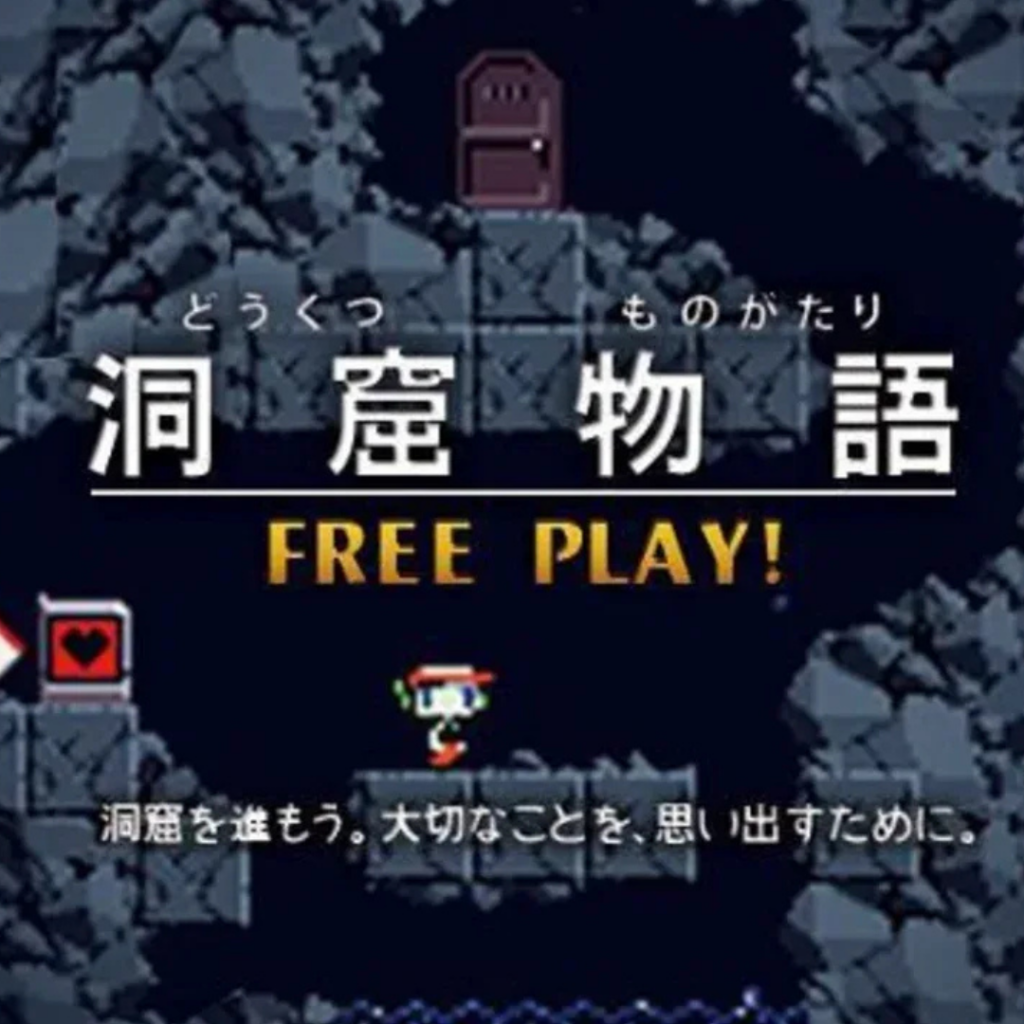
6. Cave Story
Developer: Daisuke “Pixel” Amaya
The 30-Second Pitch: A charming, challenging, and timeless action-platformer that helped launch the indie revolution.
Why It’s Special: A foundational indie title developed over five years in a developer’s free time. Cave Story’s charming pixel art, tight gameplay, and memorable story proved that small-scale, personal projects could achieve critical and commercial success, inspiring a generation of developers to start creating.
7. Papers, Please
Developer: Lucas Pope
The 30-Second Pitch: A dystopian document thriller where you play as a border inspector grappling with moral dilemmas.
Why It’s Special: Lucas Pope, a former Naughty Dog developer, created a game that is mechanically simple but thematically profound. It turns bureaucracy into a gripping, emotionally charged experience, winning a BAFTA and proving that games can be powerful vehicles for commentary and complex narratives.
8. Bright Memory: Infinite
Developer: Zeng “FYQD” Xiancheng
The 30-Second Pitch: A visually stunning FPS that looks like a AAA title but was forged by a solo dev.
Why It’s Special: This game is a technical marvel. Originally a tech demo, it grew into a full-fledged title that became an Xbox Series X/S launch title. It’s living proof that a single visionary with advanced tools can produce graphics and action that rival big-budget studios.
9. Undertale
Developer: Toby Fox
The 30-Second Pitch: An RPG where you don’t have to destroy anyone—unless you really want to.
Why It’s Special: Toby Fox’s cult classic redefined player choice and narrative consequence in RPGs. Its memorable characters, brilliant music (also composed by Fox), and meta-commentary on game mechanics created a cultural phenomenon that resonated far beyond typical gaming circles.
10. Hollowbody
Developer: Nathan Hamley (Headware Games)
The 30-Second Pitch: A chilling, dystopian horror adventure for those who miss the golden age of ‘Silent Hill’.
Why It’s Special: A more recent entry (2024) that showcases the continued strength of solo development in the horror genre. It expertly builds atmosphere and dread, focusing on environmental storytelling and puzzle-solving over cheap jump scares, demonstrating that solo developers can execute genre classics with precision and style.
Why These Solo Creations Hit Different
While the games above vary wildly in genre and style, they share a secret sauce that massive studios often struggle to bottle.
- Unfiltered Vision: No design-by-committee, no focus-grouped blandness. Every mechanic, story beat, and pixel is a direct expression of one person’s imagination. This often leads to bold, unconventional, and memorable experiences that break from tired formulas.
- Passion Over Profit (At First): These projects typically begin as labors of love, developed during nights and weekends. This passion is palpable in the final product, creating a sense of authenticity that players instinctively connect with.
- Efficiency & Innovation: With no one to delegate to, solo developers become masters of creative problem-solving. This constraint often breeds groundbreaking innovation, as seen in the genre-defining mechanics of Vampire Survivors or Balatro.
Finding Your Next Obsession
Intrigued? The beauty of the modern gaming landscape is that these Top 10 One-Person Indie Games are more accessible than ever.
- Where to Look: Digital storefronts like Steam, itch.io, and GOG are havens for indie and solo-developed games. They often have robust tagging and curation systems.
- Follow the Developers: Many solo devs are active on social platforms like Twitter/X or have dedicated Discord communities. Following them is a great way to discover similar projects and upcoming gems.
- Trust Curators: Look for curators on Steam or YouTube channels dedicated to indie gaming. They often dig up the brilliant, off-the-radar titles that major outlets might miss.
FAQs: The Solo Development Scene
How is it possible for one person to make a full game today?
Modern game development engines like Unity and Unreal Engine provide incredibly powerful, accessible toolkits. Combined with vast libraries of available assets, online learning resources, and supportive developer communities, the technical barriers are lower than ever, allowing visionaries to focus on design and creativity.
Don’t these developers get help with things like music or publishing?
Sometimes, yes. While the core design and programming are solo efforts, some developers, like Dean Dodrill of Dust: An Elysian Tail, may collaborate with others for specific elements like a soundtrack. Many also partner with indie publishers (like PlayStack for Balatro or Bigmode for Animal Well) to handle marketing, QA, and multi-platform distribution, allowing the developer to stay focused on creation.
What’s the difference between a “solo-developed” game and a typical “indie” game?
“Indie” simply means independent from a major publisher and can encompass teams of any size, from 2 to 50 people. “Solo-developed” is a specific subset where one individual is responsible for the vast majority of the game’s creation—code, design, art, and often music and writing.
What are some other great solo-developed games not on this list?
The scene is rich with talent. Keep an eye on titles like the psychological horror game Among Ashes, the subversive Moving Houses, the environmentally conscious Spilled!, the tough-as-nails platformer Will You Snail, and the charming Metroidvania Mable & The Wood.