
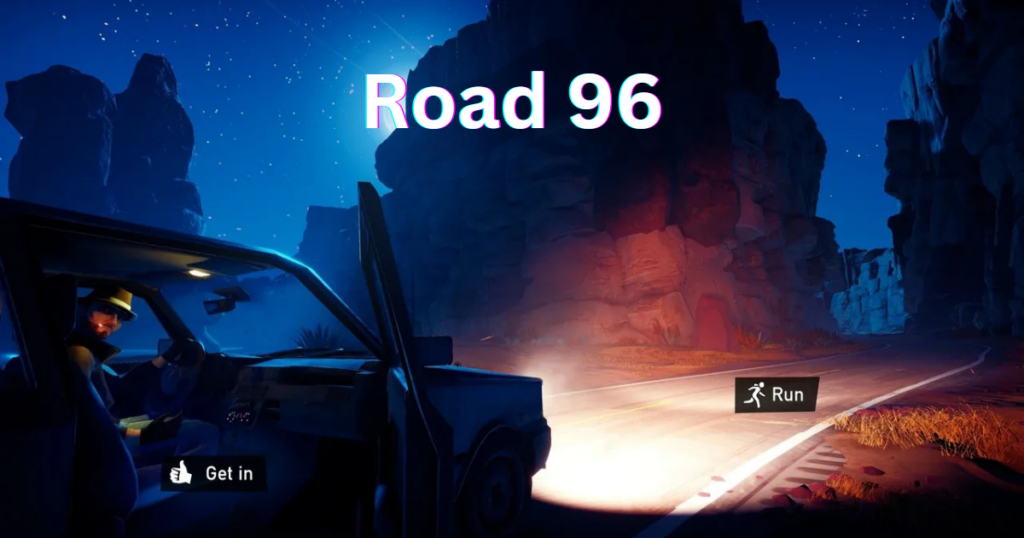
Hello everyone and welcome back to another blog post. Let’s be honest: you’ve probably driven past this game in the digital bargain bin a few times. Road 96—that “procedurally generated road trip adventure” from 2021—promises 148,268 unique story permutations. That’s either an audacious lie or programming wizardry worthy of a Nobel Prize in “Making Stuff Up.” But in 2025, when AI writes our emails and scripts our podcasts, does a game about algorithmically shuffling pre-written scenes still matter?
Spoiler: it absolutely does. And not for the reasons you think.
The Pitch That Sounds Like a Streaming Service’s Fever Dream
The setup is Captain Planet meets Thelma & Louise. You play as a series of nameless teenage hitchhikers trying to escape the fictional, politically chaotic nation of Petria in the summer of 1996. Your goal: reach the border. Your obstacles: a fascist government, your own poor life choices, and a cast of seven beautifully bizarre recurring characters whose paths you’ll cross in random order.
It’s a roguelike narrative adventure, which is a fancy way of saying “you’ll die or escape a lot, and each run changes the story.” One attempt might have you beta-testing a video game with a tech whiz kid while evading the police. The next, you’re being interviewed by a vapid TV reporter moments after helping two incompetent brothers rob a diner.
The Magic Trick: The game’s director, Yoan Fanise, said the goal was to make the AI “not create nonsense.” How reassuring! It’s like your surgeon saying, “Don’t worry, my goal today is not to leave a sponge inside you.” The miracle is that the nonsense is minimal. The scenes—all handcrafted—are shuffled by an algorithm that considers what you’ve seen before, creating a legitimately unique collage for almost every player.
Meet Petria’s Finest (And By “Finest,” I Mean “Deeply Troubled”)
The real genius isn’t the algorithm; it’s the characters. This is where the game shifts from a tech demo to a storytelling masterclass.
- Stan & Mitch: The Dumb and Dumber of armed robbery. Their chemistry is so perfect you’ll forgive them for (probably) getting you killed.
- Sonya Sanchez: A right-wing news anchor with the hair and morals of a used car salesman. You’ll love to hate her.
- Jarod: A taxi driver with the calming presence of a lit firecracker. His scenes are the most tense in the game, often involving you praying he doesn’t snap.
- Alex: The heart of the entire story. A genius kid making a video game in his garage. His plotline is an emotional gut-punch you won’t see coming.
The procedural system means you befriend these characters in a different order every time. You might meet the cynical Jarod after he’s already done something terrible in a previous run, changing your entire relationship. It creates a powerful illusion of a living world—one that remembers your actions, even when you restart as a new teenager.
The Gameplay: Minigames, Morality, and Managing Your Gas Money
Between conversations, you’re:
- Playing a full, Frogger-style arcade game on Alex’s prototype console.
- Taking an actual, multiple-choice exam to join the border patrol.
- Engaging in quick-time events to throw stolen cash out a window at pursuing cops.
- Carefully managing a tiny budget for bus fare, food, and hitchhiking risks.
It’s janky. The walking speed is glacial. You’ll click the wrong dialogue option because the UI glitched. Sometimes you’ll fail a scene for reasons that feel arbitrary. And yet, it works. The clumsiness adds to the vibe. You’re not a superhero; you’re a tired, broke kid making bad decisions with a stolen car. The frustration is… immersive?
The 2025 Verdict: Why This Old Game Still Matters
In an era obsessed with AI-generated, infinite content, Road 96 is a vital artifact. It proves that procedure is a tool, not a writer. The algorithm doesn’t create the story; it curates and connects human-made moments of brilliance. It’s the difference between a DJ creating a perfect setlist and an app just shuffling songs randomly.
The Good:
- Unforgettable Characters: You’ll think about them for weeks.
- Legitimately Unique Playthroughs: The “no two trips are alike” boast is about 85% true.
- Perfect Pacing: At 6-8 hours, it doesn’t overstay its welcome.
- An Actual Point of View: It’s a political game that’s brave enough to have an opinion.
The Bad (Because We Have to Be Fair):
- The Jank is Real: Glitches, repetition in later runs, and occasionally clumsy controls.
- Illusion of Choice: Your decisions change the ending, but the major story beats are fixed. You’re steering the car, not building the road.
- The “1996” Aesthetic: The synthwave soundtrack and low-poly looks are cool, but they’ve been done to death since 2021.
Should You Buy It?
Yes, if: You value narrative innovation over graphical polish. You like stories about weirdos forming dysfunctional families. You’ve ever wondered what would happen if a road trip movie was directed by an excel spreadsheet.
No, if: You demand buttery-smooth gameplay. You need crystal-clear political messaging handed to you. The phrase “emotional rollercoaster” makes you roll your eyes.
The Bottom Line: Road 96 is a beautiful, messy, heartfelt experiment. It’s a game that trusts its writing more than its code, and for that alone, it’s worth your time. It’s the proof that in the future of AI-driven everything, the human touch—flawed, glitchy, and brilliant—is still the only thing that can truly make us feel something.
Now, if you’ll excuse me, I have a sudden urge to go hitchhiking and make some profoundly questionable new friends.