
Hello everyone and welcome back to another blog post. Let’s get one thing straight: Hades 2 is a masterpiece. At least, that’s what the 95 Metacritic score and the glowing reviews from every major publication would have you believe. Supergiant Games, the developers who can seemingly do no wrong, have done it again. The art is stunning, the combat is tighter than Zagreus’s chiton, and the soundtrack is already living rent-free in our heads.
So then, why does a casual scroll through certain corners of the internet—ahem, Steam Discussions and Reddit—feel like you’ve stumbled into an alternate dimension where the game is a “disappointing 7/10” at best?
It’s the classic tale of the unassailable critical darling versus the “passionately opinionated” player base. And as someone who has poured more hours into the Underworld than Hades himself, I’m here to bridge this chasm.
The Critic’s Goggle: A View from Mount Olympus
When a reviewer, often on a tight deadline, boots up Hades 2, they see a sequel that iterates perfectly. They analyze it based on a clear rubric:
- Art & Audio (10/10): Obvious. It’s a moving painting set to a banging synth-orchestral mix.
- Gameplay Loop (10/10): The core combat is refined, the new weapons are inventive, and the roguelite mechanics are as addictive as ever.
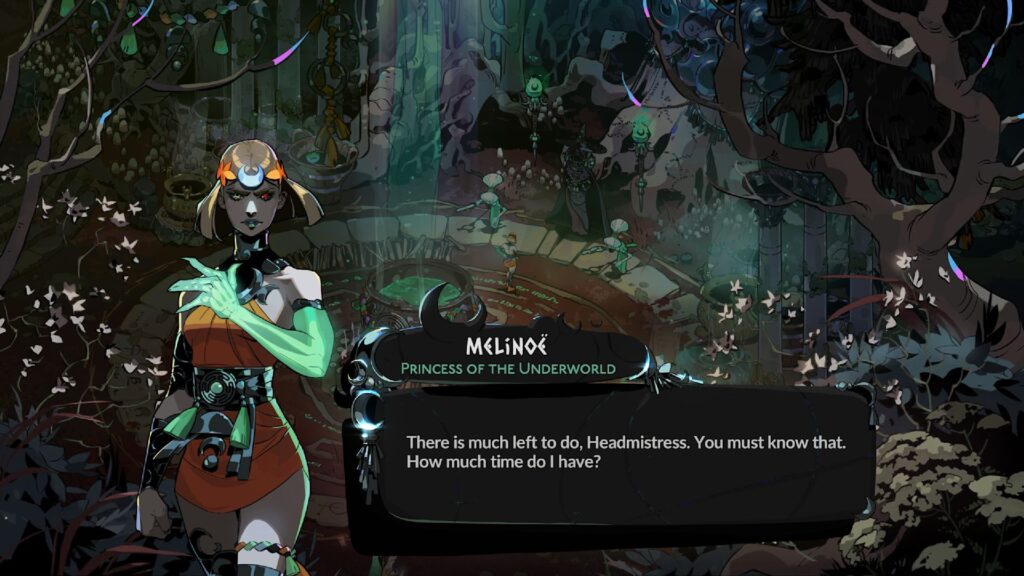
- Narrative & Characters (10/10): Melinoë is a compelling protagonist, and the new cast (hello, Hecate) is instantly iconic.
- Technical Polish (10/10): It launched without major bugs—a miracle in 2025 that deserves its own award.
From this 50-hour playthrough (thorough, for a review), the conclusion is simple: it’s a sublime game. The job is done. The review is written. The score is given.
The Player’s Grind: A View from the Trenches of Tartarus
Now, let’s swap the critic’ goggle for the player’s headlamp. The player isn’t just experiencing the game; they are interrogating it. They are in for the 100-hour grind, the min-maxing, the meta-progression. And this is where the “issues” emerge.
1. The “It’s Just More Hades” Paradox
Critics: “A brilliant, confident evolution of the formula!”
Players: “So, it’s the same game but with a witch? I’ve already done this.”
Ah, the damned-if-you-do, damned-if-you-don’t of sequel design. Change too much, and you betray the original. Change too little, and you’re accused of making a glorified expansion pack. Supergiant played it safe, and for some, that safety feels… predictable. Because, you know, predicting the endless, chaotic whims of the Greek pantheon is so easy.
2. The Endgame Gear Check: From Skill to Grind
Critics: “A satisfying and complete power progression system.”
Players: “The endgame isn’t about skill anymore; it’s about who farmed the most powerful weapon aspects.”
Here’s the tea: the first Hades was a masterpiece of skill and adaptation. The endgame felt like a test of everything you’d learned. In Hades 2, a vocal part of the community argues that the deepest endgame content shifts from a “skill check” to a “gear check.”
Critics, who played through the main story and a taste of the end, saw a fun and robust progression. But players pushing into the highest heat levels or the true final boss are finding that your build’s damage output is gated heavily behind fully upgraded weapon aspects and specific, high-level Arcana cards. This means that success can feel less about your god-like reflexes and more about whether you spent 10 hours farming Cinder to unlock the final perk on your weapon.
3. The Melinoë vs. Zagreus Debate
Critics: “A more methodical and strategic protagonist!”
Players: “She’s so slow! Where’s my dash-strike spam?”
Melinoë’s combat is deliberate. It rewards patience and positioning over Zagreus’s unga-bunga dash-swingfest. This is a conscious, brilliant design choice. It is also, for a portion of the player base who mastered Zag’s rhythm, a source of immense friction. Different doesn’t mean worse, but try selling that to a speedrunner who just wants to go fast.
4. The Shadow of a Giant
The first Hades wasn’t just a game; it was a cultural phenomenon. It perfected the narrative roguelite. Hades 2 had the impossible job of following it. It’s not a “bad sequel,” it’s a sequel to what many consider a perfect game. The only way to go was… sideways. And in the hyperbole-driven world of online discourse, “sideways” often gets translated as “down.”
Reconciling the Two Realities
So, who’s right? Well, both sides. Shocking, I know. The critic’s view is a snapshot of quality; the player’s view is a longitudinal study of engagement. The “grind” complaints are valid feedback that Supergiant is likely already monitoring.
It’s crucial to recognize the context. A professional review is one data point. The collective voice of the player base is another. A trustworthy analysis doesn’t dismiss either. It acknowledges that a game can be a critical masterpiece and have legitimate pacing issues for its most dedicated fans. The trust comes from presenting both sides without falling into the rage-bait trap.
The Verdict: A Tale of Two Games
Hades 2 is, objectively, one of the best games of 2025. It is also a game with flaws that become apparent only after you’ve peeled back its gorgeous layers and sunk in dozens of hours. The critics aren’t “wrong,” they just finished the five-star meal and wrote their review. The players are the ones who stayed in the kitchen, complaining that the saffron for the 15th course is too hard to find.
Is the player reaction overblown? In some cases, absolutely—this is the internet, after all, where a slight imbalance in a weapon’s DPS is treated with the seriousness of a geopolitical crisis.
But is it entirely invalid? No. It’s the sound of a passionate community giving feedback on a game they love enough to critique so fiercely. After all, you don’t write a 500-word essay on the drop rates of Cinder if you don’t care.
So, should you play Hades 2? Yes. It’s fantastic. Just maybe don’t go in expecting a perfect, frictionless sequel. And if you do get frustrated with the grind, just remember: in the full release, they’ll probably adjust it. Until then, the only thing truly damned are our free time and our expectations.
By the way, writing this review is kind of special for me, since the very first game I ever reviewed was the first Hades, if you want to check that post out, click here. I was just starting and learning how to write a blog, so don’t be too harsh with noob Mario 😉 and I’m so happy to be able to write about games, I hope you enjoy the blog, see you next time! And don’t forget to check out the game in the Steam store.