
Hello everyone and welcome back to another blog post. Look, Halloween is supposed to be fun. Candy, costumes, maybe a lukewarm apple cider that someone spiked with too much cinnamon. But if you’re reading this, you’ve probably decided that “fun” isn’t enough. You want to be genuinely unsettled. You want to sit in the dark, headphones on, and question why you voluntarily chose to spend your evening this way.
Indie games are uniquely good at this. Without the safety rails of a AAA budget, indie developers can make bosses that are weird, unfair, and psychologically invasive in ways that a focus-tested corporate product would never allow. Below are ten indie game bosses that will absolutely ruin your Halloween—and I say that with the deepest respect for the developers who made them.
A quick note before we begin: this list is based on my own hands-on time with these games, late nights included, plus a lot of screaming. I’ve finished most of these (or rage-quit at 2 a.m. and returned the next day). I’m not here to parrot a wiki; I’m here to tell you which of these encounters actually made me consider unplugging my PC.
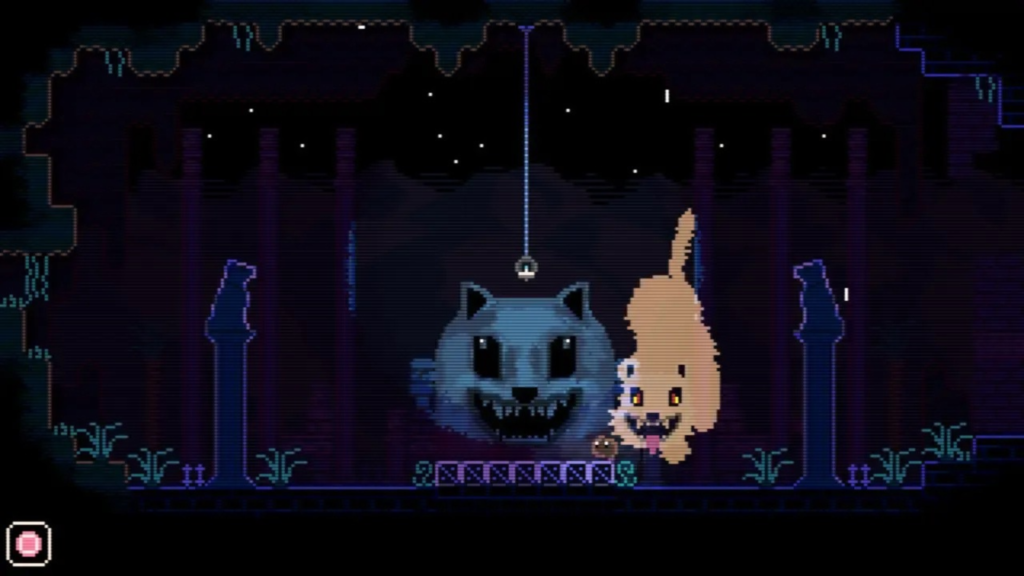
1. The Ghost Dog — Animal Well (2024)
It doesn’t attack so much as haunt. The Ghost Dog in Animal Well appears early, floats through walls, and chases you with a permanent, painted-on grin while emitting a howl that sounds like a car alarm designed by a sadist. What makes it worse is the context: Animal Well is otherwise a gorgeous, cute pixel-art Metroidvania. You’re a little blob solving puzzles. Then this thing manifests out of frame and your blood runs cold.
I played Animal Well on a recommendation from a friend who described it as “cozy.” I have since reconsidered our friendship. The Ghost Dog doesn’t have a health bar in the traditional sense—it’s more of a persistent hazard you have to outmaneuver and eventually banish by returning a disc to a shrine. The howling is the real damage dealer. It depletes your composure, not your HP. That’s a design choice only an indie game would make, and it works.
2. The Bunker Monster — Amnesia: The Bunker (2023)
Frictional Games has been ruining weekends since The Dark Descent, but the Bunker Monster is their most relentless creation yet. It hunts you through a semi-open World War I bunker, and if the lights are out, it becomes more active. There is no boss arena. There is no pattern to learn. There is just a thing that hears you, finds you, and ends you.
I played The Bunker with a headset on and a cat sitting next to me. The cat left at some point. I didn’t notice until I paused. That’s the kind of focus this game demands. The monster isn’t a puzzle to solve; it’s a pressure system. Every generator you refuel, every door you pry open, is a negotiation with the possibility that you’ve just made too much noise. I have never been so relieved to see a credits screen.
3. Falke — Signalis (2022)
Signalis is a PS1-style sci-fi horror game with an esoteric story and combat that feels deliberately clumsy. Falke, the final boss, is a six-phase encounter interwoven with cutscenes and a soundtrack that makes you feel like you’re doing something wrong just by being there. The design is borderline angelic—and that’s the point. It’s beautiful in the way a fever dream is beautiful right before it turns.
I died to Falke more times than I’d like to admit. What kept me coming back wasn’t the difficulty (though it is hard), but the atmosphere. Signalis is a game about memory and identity, and Falke feels like the physical manifestation of a question you don’t want answered. The fight is long, the phases shift, and the ending is worth the suffering. If you haven’t played it, fix that. If you have, you already know.
4. Edward Crow — Crow Country (2024)
A theme park called Crow Country. A mascot named Edward Crow. A final boss fight where the mascot transforms into a grotesque mutant and attacks from the center of an arena while you scramble for positioning. It’s classic Resident Evil-inspired survival horror, but with a distinctly indie weirdness that makes the whole thing feel like a bad memory from a childhood you didn’t have.
I went into Crow Country expecting a nostalgic throwback. I got a game that understands exactly why PS1 horror worked: not because of the graphics, but because of the vibes. Edward Crow is a great example. The transformation is gross, the arena is claustrophobic, and the game never lets you forget that you’re trespassing somewhere you shouldn’t be. It’s not the scariest game on this list, but it’s one of the most committed to its own bit.
5. The Ghost Lady — Fear the Spotlight (2024)
Published by Blumhouse Games (yes, that Blumhouse), Fear the Spotlight is a PS1-era throwback with no combat and a relentless ghost lady who pursues you through a badly lit, claustrophobic house. She doesn’t have a name. She doesn’t need one. She’s just there, and the game’s lack of combat means your only option is to run, hide, and solve puzzles while your heart rate does things it shouldn’t.
I played this one in a single sitting, which was a mistake. The Ghost Lady isn’t a boss in the “learn the pattern, hit the weak point” sense. She’s a presence. The game is short (you can finish it in an evening), but the density of dread is remarkable. It’s the kind of game that makes you check behind you in your own apartment. For a Halloween recommendation, that’s the highest praise I can give.
6. The Manticore — Animal Well (2024)
I know, I know. Two Animal Well bosses on one list. But hear me out. The Manticore is the game’s final boss, and visually it’s an unholy abomination: human head, lion body, scorpion tail, glowing eyes. The Ghost Dog is scarier in practice, but the Manticore is scarier in concept. It’s the thing waiting at the bottom of the well, and the fight itself is a test of everything the game has taught you.
What makes the Manticore work is contrast. You’ve spent hours in Animal Well‘s beautiful, secret-filled world. You’ve solved puzzles, found eggs, befriended (or avoided) the wildlife. Then you reach the Manticore, and the game reminds you that it’s been flirting with horror the entire time. The design is almost comical, but the implication of it—the fact that this thing exists in the same world as the cute little blob—is what lingers. It’s a reminder that indie games don’t have to choose between charming and horrifying.
7. Karl Heisenberg — Resident Evil Village (2021)
Okay, technically Village is Capcom, not indie. But Heisenberg’s boss fight is so delightfully unhinged that I’m including it anyway, because it represents the spirit of indie madness: a man who turns into a massive scrap-metal monster while you fight him in a mini-tank. It’s ridiculous. It’s awesome. It’s the kind of set-piece that a focus group would have vetoed, and that’s why it belongs here.
I’m bending the rules, and I’m not sorry. The indie spirit isn’t about budget; it’s about commitment to a bit. Heisenberg’s fight is committed. It’s a mech battle in a horror game, and it works because Village has spent hours building him up as a magnetic, menacing presence. When he finally transforms, you don’t think “this is silly.” You think “oh no, this is happening.” That’s good design.
8. The Final Boss — Happy’s Humble Burger Farm (2021)
This game is a fever dream. You’re running a fast-food restaurant, and then suddenly you’re fighting something indescribable in a boss encounter that throws mechanics at you with no warning and no hand-holding. The terror isn’t just the creature; it’s the whiplash. One minute you’re flipping burgers, the next you’re fighting for your life against something that feels like it wandered in from a different genre entirely.
I went into Happy’s Humble Burger Farm blind, which is the only correct way to play it. The final boss is memorable not because it’s the hardest fight ever designed, but because it’s the most unexpected. The game’s tone is so specific—corporate horror, mundane dread—that when the chaos arrives, it feels like the game has been lying to you the whole time. Which, to be fair, it has. That’s the trick.
9. The Janitor — The Mortuary Assistant (2022)
Why it’s terrifying: The Mortuary Assistant is a game about embalming bodies while demons try to possess them, which is already a sentence I hate writing. The Janitor is the recurring antagonist—a hulking, silent figure who appears in the mortuary and turns the game from “stressful job simulator” into “run for your life.” He doesn’t have a health bar. He doesn’t have a pattern. He just is, and the only way to survive him is to do your job faster and hope he doesn’t show up.
I played The Mortuary Assistant with the lights on, which did not help. The Janitor is terrifying because the game trains you to focus on the bodies in front of you, and he punishes that focus. You’re doing your job, you’re concentrating, and then you look up and he’s standing in the doorway. It’s a cheap trick, but it’s executed with such precision that I forgive it entirely. This is the one that made me flinch most on this list.
10. The Entity — Iron Lung (2022)
Why it’s terrifying: Iron Lung is a short, brutal indie horror game about piloting a submarine through an ocean of blood on a desolate moon. It’s mostly atmospheric dread, but the final encounter—when something outside the sub makes itself known—is one of the most effective horror moments in recent indie gaming. You can’t fight it. You can’t run. You can only sit in your tiny metal coffin and watch.
I played Iron Lung on a laptop with headphones, and I genuinely had to take a break afterward. It’s not a “boss” in the traditional sense—there’s no health bar, no arena, no phase transitions—but it’s the climactic encounter that the entire game has been building toward, and it delivers. It’s the purest expression of indie horror on this list: no budget, no spectacle, just dread and a screen that won’t let you look away. David Szymanski understood the assignment.
A Closing Note (Because Trust Matters)
If you’ve made it this far, congratulations. You either love horror games or you’re procrastinating something important. Either way, here’s the honest truth: the scariest bosses aren’t the ones with the biggest health bars. They’re the ones that get inside your head. The Ghost Dog’s howl. The Bunker Monster’s footsteps. Cynthia Weaver’s return. These are the moments that stick with you long after the credits roll.
This list isn’t definitive. It’s not scientific. It’s just one person’s account of the indie bosses that have made Halloween feel genuinely dangerous. If you have your own list—or if I’ve missed something that terrified you—that’s the point. Horror is personal. The best you can do is share what worked, and let someone else discover their own nightmare.
Now go play something. And maybe leave a light on.