
Hello everyone and welcome back to another blog post. So you finished Nobody Wants to Die. You stared at your screen. Rain streaked down the digital window of your mind. James Karra’s gravelly voice is still rattling around your skull like a loose bullet casing. And now you’re sitting there at 2 AM thinking, “What the hell do I do with my life now?”
Here’s the thing about Nobody Wants to Die — it’s a gorgeous, atmospheric, neon-soaked cyberpunk noir detective game with one fatal flaw: the actual “game” part is about as challenging as a coloring book. The memory-reconstruction mechanics are basically “click the glowing thing until the game feels bad for you and moves on.” The story is short. The ending is… a choice. But the vibe? The vibe is immaculate. And that’s why you’re here. You want more of that vibe.
And since you’re clearly a person of taste, we’re keeping this list strictly indie. Just the good stuff — the weird stuff, the personal stuff, the stuff made by twelve people in a basement in Kraków who haven’t slept since 2019.
Here are seven indie games that actually deliver.
The 7 You Should Actually Play
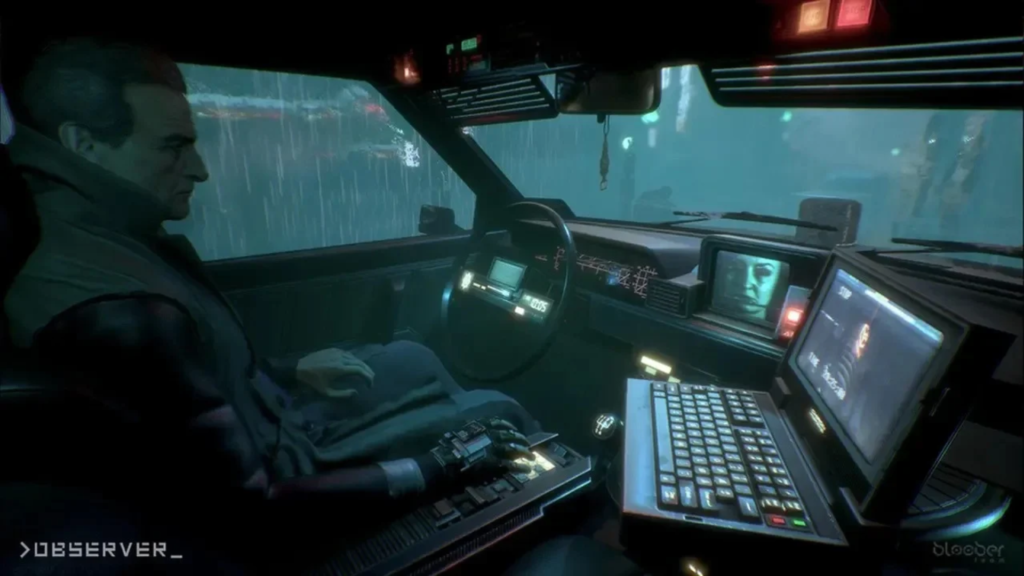
1. Observer — The DNA Test You Didn’t Know You Needed
If you played Nobody Wants to Die and thought, “Man, this memory-invasion stuff is cool but feels a little… shallow,” congratulations. Your instincts are correct, and Observer is here to show you how it’s done.
This is Bloober Team’s 2017 cyberpunk horror game — made back when they were still a scrappy Polish indie studio and not whatever they are now. You play Daniel Lazarski, a “neural detective” voiced by Rutger Hauer — yes, the Rutger Hauer, Roy Batty himself from Blade Runner. You jack into people’s memories. You dig through their trauma. You find things you absolutely did not want to find.
Where Nobody Wants to Die treats memory reconstruction like a slightly tedious office task, Observer treats it like a descent into madness. The memories are glitchy, nightmarish, hostile. The game is genuinely scary in a way Nobody Wants to Die never attempts. It’s the clear inspiration, and it’s better at the thing it inspired. Play it.
Same cyberpunk detective fantasy, same memory-invasion hook, but with actual horror, actual tension, and actual Rutger Hauer. Also, it’s indie. Also, it’s terrifying. Also, you’re welcome.
One thing it does differently: It actually makes you afraid of what you’ll find in someone’s head. Nobody Wants to Die makes you mildly inconvenienced by it.
2. Disco Elysium — The “Adults in the Room” Option
Look, I’m going to say something controversial: the dialogue in Nobody Wants to Die is mid. James and Sarah talk like two ChatGPT prompts trying to out-sad each other. It’s fine. It’s serviceable. But it doesn’t sing.
Disco Elysium sings. It sings opera. It sings drunk karaoke at 3 AM. It sings a 40-minute prog-rock epic about the nature of failure. And it was made by ZA/UM, a studio that — for one glorious moment — proved that indie games can out-write anything Hollywood has produced in the last decade.
You’re a detective. You’re a disaster. Your brain has 24 separate skills that all have opinions, and most of them are bad. You will argue with yourself. You will fail rolls you should have passed. You will solve a murder while also trying to figure out if you’re a communist, a fascist, a moralist, or just a sad guy in a tie.
If Nobody Wants to Die is a slick neo-noir graphic novel, Disco Elysium is a Russian novel that got drunk and decided to be a detective story. It’s the gold standard for broken-detective narratives. Nothing else comes close.
It’s the broken-detective game. It’s the dialogue game. It’s the “your choices actually matter and also everything is on fire” game. If you loved the idea of James Karra, you’ll love the execution of Harry Du Bois.
One thing it does differently: It has a sense of humor. Nobody Wants to Die has the comedic timing of a wet blanket. Disco Elysium will make you laugh out loud and then immediately want to cry. That’s range.
3. What Remains of Edith Finch — Short, Devastating, Perfect
You know how Nobody Wants to Die is like four hours long and leaves you feeling emotionally hollow but also kind of unsatisfied? What Remains of Edith Finch is also short. But it leaves you emotionally wrecked in a way that feels earned.
This is Giant Sparrow’s 2017 masterpiece — the gold standard for narrative walking sims, and the game that proved “indie walking sim” doesn’t have to mean “pretentious nothing-burger.” You’re exploring your family’s weird, impossible house. Each room tells the story of a relative who died in a strange, poetic, heartbreaking way. There’s no combat. No puzzles that’ll stump you. Just pure, concentrated storytelling.
Where Nobody Wants to Die uses its neon aesthetic to distract from its thin plot, Edith Finch uses its magical-realism aesthetic to amplify a story that will burrow into your chest and stay there. If you want to feel something other than “huh, that was pretty,” play this.
It’s the “short narrative indie that actually justifies its length” benchmark. Also, it respects your time.
One thing it does differently: It’s not about solving anything. It’s about understanding something. And it’ll break your heart in about two hours. Efficient.
4. The Case of the Golden Idol — Indie Detective Work That Actually Respects Your Brain
Nobody Wants to Die talks a big game about being a detective game. Then it hands you a glowing clue and says, “Good job, buddy. Here’s the next one.”
The Case of the Golden Idol — made by a tiny independent studio called Color Gray Games — does not do that. It hands you a scene. It hands you some words. It says, “Figure it out, genius.” And then it sits there, sipping its coffee, watching you struggle.
You’re investigating a series of bizarre deaths across a decades-long timeline. You fill in blanks. You identify suspects. You piece together motives. The game never tells you if you’re right until you commit. And when you get it wrong, you feel like an idiot. When you get it right, you feel like Sherlock Holmes.
It’s not cyberpunk. It’s not noir. But it understands the core of what makes detective work satisfying — the “aha” moment, the click, the puzzle snapping into place — better than Nobody Wants to Die ever does.
If you wanted Nobody Wants to Die to actually let you detect, this is the indie that delivers.
One thing it does differently: It actually trusts you to be smart. Radical concept, I know.
5. NORCO — Southern Gothic Neon, or: Cyberpunk’s Weird Cousin
You want atmosphere? You want a world that feels lived-in and rotten and beautiful? You want to feel like you’re drowning in a place that used to have a future and now just has a past?
NORCO is that game. Made by a small indie team at Geography of Robots, it’s a point-and-click Southern Gothic noir set in a near-future Louisiana where automation has gutted the working class and something weird is happening in the swamps. You’re looking for your missing brother. You’re also maybe losing your mind. The game doesn’t clarify.
It’s not cyberpunk in the “neon and rain and flying cars” sense. But it’s cyberpunk in the actual cyberpunk sense — the “late capitalism has ruined everything and the only escape is either death or transcendence” sense. It’s got the same existential dread as Nobody Wants to Die, but it’s rooted in a place that feels real, not like a Blade Runner set piece.
Same feeling of a broken person searching for meaning in a broken world. Different aesthetic, same soul.
One thing it does differently: It’s not about being cool. It’s about being human. And it’s all the better for it.
6. Cloudpunk — Same Neon, Different Speed
Nobody Wants to Die is a slow, moody, atmospheric game. Cloudpunk is… also atmospheric, but in a completely different way. Made by German indie studio Ion Lands, it’s a delivery driver simulator in a massive vertical cyberpunk city. You fly around in your hovercar. You meet weird people. You deliver packages. You get caught up in something bigger.
It’s not a detective game. It’s not a noir. But it feels like the same world. The neon. The rain. The class divide. The sense that the city is alive and you’re just a tiny part of it. If you loved the aesthetic of Nobody Wants to Die but wanted something more relaxed, more human, and less “everything is terrible forever,” Cloudpunk is a breath of fresh, slightly toxic, neon-scented air.
Same visual language, completely different emotional register. It’s cyberpunk from the ground level, not the penthouse.
One thing it does differently: It’s not about solving a mystery. It’s about living in a world. And sometimes that’s enough.
7. Alter Ego — The Hidden Gem You Haven’t Heard Of
This one’s for the deep divers. Alter Ego is a recent indie that plays with similar memory-mechanics but in a completely different setting. You’re investigating a disappearance. You’re diving into memories. But the tone is different — more melancholy, more personal, less “cyberpunk noir” and more “what does it mean to remember someone?”
The developer is Fruit Salad Torture—a tiny indie studio that also published it.
The 2023 version on Steam is a 2D point-and-click narrative adventure where you play Reese, a rat whose girlfriend Winona is found dead, and you explore a mindscape of memories to find out what actually happened. It had a peak of 4 concurrent players but sits at around 93% positive reviews, so it’s obscure even by hidden-gem standards.
Final Thoughts: What to Play First
If you want the closest thing to Nobody Wants to Die but better, play Observer. It’s the direct lineage. Same DNA, stronger execution. Also, it’s terrifying.
If you want the best broken-detective game ever made, play Disco Elysium. It’s not cyberpunk, but it understands James Karra’s soul better than James Karra does. And it’s one of the greatest indie games ever made.
If you want to feel something other than “huh, that was pretty,” play What Remains of Edith Finch. Bring tissues. It’s short. It’ll ruin you.
And if you want to actually detect something for once, play The Case of the Golden Idol. It respects your brain. It’s brilliant. Play it.
Still haven’t played Nobody Wants to Die? Start with our full 2026 guide and review to see if it’s worth your time.
Finished it and starving for more? You’re in the right place. We’ve got seven indie recommendations.
Now go forth. Solve some crimes. Question your humanity. Support independent developers. Try not to get too drunk on the job.
Disclaimer: No androids were harmed in the writing of this article. Some were mildly inconvenienced. Support the weird stuff.