
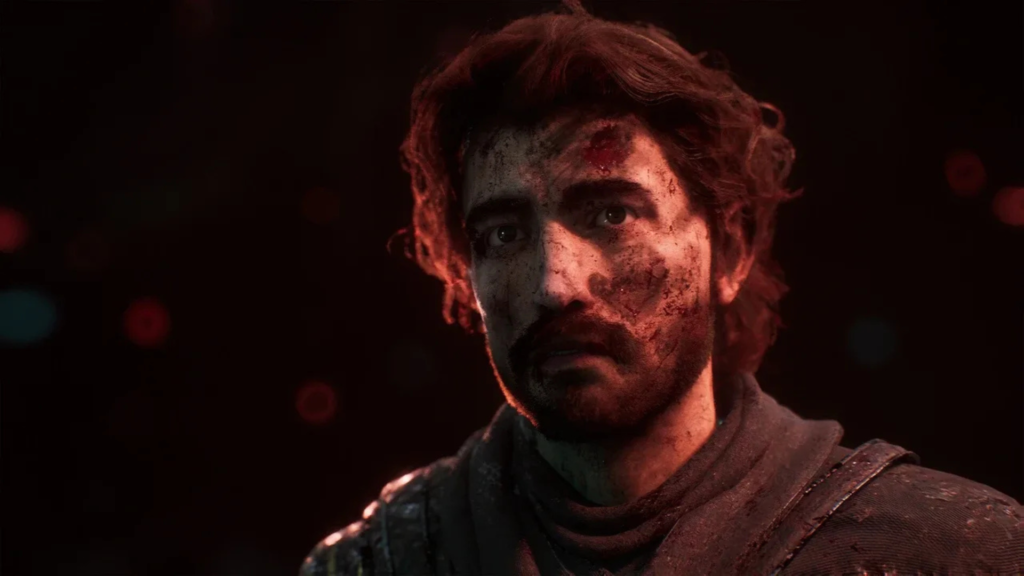
Hello everyone and welcome back to another blog post. Year by year, she erases us. Every year, the Paintress wakes and paints a number on her monolith. Everyone that age turns to smoke and fades away. Tomorrow, she paints “33.” Tomorrow, we depart on our final mission—destroy the Paintress, so she can never paint death again.
That’s the official pitch. Clean, simple, heroic. A bunch of brave souls marching off to kill a god-monster before she can erase them from existence. Inspiring stuff.
It’s also completely wrong.
If you’ve finished Clair Obscur: Expedition 33, you know the truth. If you haven’t, turn back now, because we’re about to spoil everything. The Paintress isn’t a monster. She isn’t a god. She isn’t even the one doing the killing. She’s a mother who lost her son and refused to let him go. And the “apocalypse” tearing her world apart is actually just a family argument playing out across a painted canvas.
So Who Is the Paintress, Actually?
Her real name is Aline Dessendre. Wife of Renoir. Mother of Clea, Verso, and Alicia. Resident of Paris in a world that looks suspiciously like Belle Époque France, except with magical painters who can literally walk into their own artwork and live there.
The Dessendre family has a specific gift: they’re Painters. Using something called Chromas, they can create entire worlds inside canvases and step into them. Think of it like a VR headset, except instead of blurry polygons, you get a fully realized universe with cities, monsters, and people who don’t know they’re fictional.
Aline’s son Verso died in a fire. A fire that also left her daughter Alicia scarred and mute. The kind of tragedy that breaks a family permanently.
Aline’s response to this unbearable loss was… to move into one of Verso’s paintings and refuse to leave.
Yes. She literally painted herself into her dead son’s fantasy world and stayed there, because inside the Canvas, she could create a version of Verso that still existed. A copy. A comfort. A prison she built for herself.
The Canvas: Verso’s Playground Turned Grief Hotel
The world of Expedition 33—Lumière, the Continent, the Gestrals, Esquie, all of it—was originally painted by the real Verso as a child. It was a fantasy land he created to play in with his sisters. Cute, right?
Then he died, and his mother moved in.
The Canvas contained a fragment of Verso’s soul, which is why Aline could interact with a painted version of him. She created painted copies of her whole family: Painted Renoir, Painted Verso, Painted Alicia, Painted Clea. She gave them immortality. She made them her companions in grief.
And then her actual husband, the real Renoir, followed her in—not to join her, but to drag her out.
The “Gommage” Isn’t Aline’s Fault (Mostly)
Here’s the twist that recontextualizes everything. The annual Gommage—the erasure of people based on age—isn’t Aline’s doing. It’s Renoir’s.
When Renoir entered the Canvas to retrieve his wife, they fought. Their battle created the Fracture, the cataclysm that reshaped the world. Aline managed to trap Renoir beneath the Monolith, but doing so bound her to the Monolith itself. A stalemate. Two immortal painters locked in a magical staring contest, with an entire civilization caught in the crossfire.
Renoir, still trying to force Aline out, began erasing parts of the Canvas. His power wasn’t unlimited—Aline’s grip on the world was strong—so he could only erase the oldest creations first. The people who had existed longest. The oldest humans in Lumière.
That’s why the number started at 100 and ticked down. It wasn’t a countdown to death. It was a countdown to Renoir’s increasing power. As Aline weakened and her control eroded, Renoir could erase younger and younger people. The Gommage was collateral damage in a marital dispute.
Aline, sitting atop the Monolith, painting those numbers every year, wasn’t announcing who would die. She was warning them. Trying to give them time. A small mercy from a woman who couldn’t save them, couldn’t leave, couldn’t do anything but watch.
The Renoir Problem: There Are Two of Him
One of the most confusing parts of the lore is the existence of two Renoirs.
Real Renoir—called The Curator in-game—is the actual husband, a warm and desperate man trying to save his wife from herself. He knows that staying in the Canvas too long will kill her. He wants her back in reality, even if it means destroying the world she’s hiding in.
Painted Renoir—the villain you fight—is a creation of Aline’s. She painted a version of her husband that reflected her anger and resentment. In the painted version, Renoir is controlling, cruel, and tyrannical. Painted Renoir defends Aline not out of love, but because that’s the role Aline assigned him.
When you “kill” Painted Renoir, you’re not defeating the real antagonist. You’re just destroying one of Aline’s emotional security blankets.
Maelle Is Alicia (Yes, Really)
The game’s protagonist Maelle is actually Alicia Dessendre, Aline and Renoir’s real daughter.
After the fire that killed Verso and scarred Alicia, the real Alicia attempted to enter the Canvas to retrieve her parents. But she wasn’t a skilled Painter like her mother. Instead of painting herself into the world as a distinct avatar, she got absorbed into Aline’s creation. She was reborn as Maelle, with no memories of her real life, no knowledge of her true identity, and no idea that the world she grew up in was a painting her dead brother made.
Maelle lives sixteen years in the Canvas, believing she’s just another orphan of the Gommage. She falls in with Gustave, joins Expedition 33, fights to kill the Paintress—her own mother—without knowing any of it.
At the end of Act 2, when Maelle is Gommaged, she’s ejected from the Canvas back into her real body, and all her memories return. She remembers being Alicia. She remembers the fire. She remembers her brother. And she remembers that the world she just spent her entire life fighting for is a fictional construct.
Fun times.
Why Did Aline Paint Herself as a Giant Silent Woman?
This is where things get psychologically interesting.
Aline, trapped atop the Monolith, is described in fan analysis as assuming “the stereotype of the silent parent.” She doesn’t speak. She doesn’t explain. She just sits there, painting numbers, watching her husband’s forces erase her creations one by one.
Some fans have asked why Aline didn’t just write a clear message on the Monolith. Something like: “Hey, my husband is erasing you all, please help.” It seems like a pretty obvious solution.
The answer, according to fan theories and the game’s subtext, is that Aline is mentally broken. She’s spent years—maybe decades—trapped in a painting, watching her dead son’s face every day, fighting her actual husband, losing control of her own creation. She’s not thinking strategically. She’s surviving. The numbers she paints aren’t a strategy. They’re a ritual. A way to feel like she’s doing something while she slowly loses everything.
And honestly? There’s a heartbreaking moment in the prologue that foreshadows all of this. Sophie, Gustave’s girlfriend, looks at the Paintress sitting hunched by the Monolith and says: “She looks… sad. Maybe she’s a prisoner too. Stuck in the same cycle with us.”
Sophie figured it out in the first thirty minutes. The entire city spent decades missing it.
Fan Theories: The Shrine, the Cultists, and the Cut Content
One of the most fascinating unresolved threads in the lore is the Shrine to the Paintress on the Continent, guarded by cultist Nevrons.
In-game, Maelle can ask a local creation about the shrine, and the response is cryptic: the worshippers “spoke as if they knew the Mistress.” But their description of the Paintress “did not match the Mistress.” This suggests that someone knew the truth—that Aline wasn’t a god, but a grieving mother—and built a shrine in her honor.
Fan theories suggest these worshippers might have been survivors from before the Fracture, or even former expedition members who gave up and settled on the Continent. Some believe the cultists were originally humans transformed into Nevrons, rewarded by Aline with longevity in exchange for their devotion.
This content appears to have been partially cut from the final game, leaving behind tantalizing hints and no answers. Classic.
What Does It All Mean?
The lore of Expedition 33 isn’t complicated for the sake of being complicated. Every layer of the Canvas, every painted copy, every erased citizen—it all serves one theme: grief makes prisoners of us all.
Aline is trapped in the Canvas because she can’t let go of Verso. Renoir is trapped in a war against his own wife because he can’t reach her. Maelle is trapped between two identities because she was never allowed to choose. And the people of Lumière are trapped in a countdown they never understood, dying because a family couldn’t stop fighting.
The Paintress isn’t a villain. She’s a monument to the idea that love, when twisted by loss, can become something terrible. Something that erases whole worlds.
And the worst part? She wasn’t even the one doing the erasing.
The lore makes the clock tick. See how it fuels the emotional narrative in our main review.