
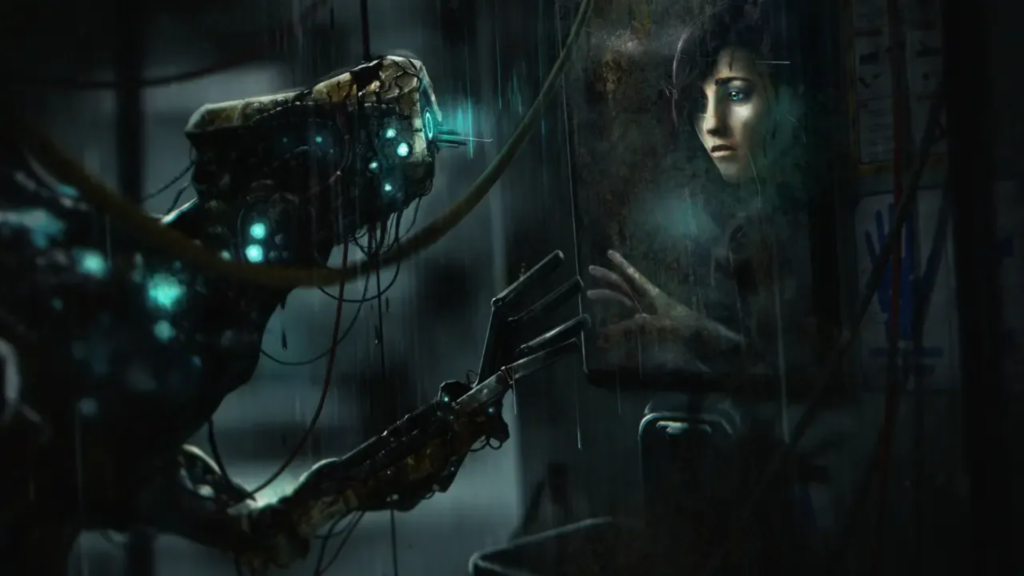
Hello everyone and welcome back to another blog post. Look, the internet has been screaming into the void about SOMA for a solid decade now. If you listen to the hyperbole, it’s a “transcendent experience,” a “life-changing event,” a “flawless masterpiece of science fiction” that will “forever alter your perception of reality.” Which is a lot of pressure to put on a game where you mostly just follow glowing lights and press buttons because, well, you’re playing a video game and you need to do something.
But here we are in 2026, ten years after the deep-sea horror of Pathos-II first made us question our very existence, and we’re here to talk about it. Why? Because apparently, we’re all still traumatized. And because writing about digital consciousness for a blog is absolutely hilarious. So, grab your scuba gear and your favorite existential crisis. Let’s dive in.
The “Experience” of Being Simon Jarrett (Poor Guy)
First up, let’s talk about actually playing this thing. In the real world, that means you’ve actually sat down, endured the terror, and come out the other side questioning everything. In the world of SOMA, “the thing” is being a brain-damaged man from Toronto who wakes up 100 years in the future at the bottom of the ocean.
Our protagonist, Simon, is the ultimate amateur. He stumbles through the wreckage of human civilization with all the grace of a confused golden retriever. I’ve been there, Simon. I, too, have woken up and had no idea where I was, though usually it involved a bad decision with tequila, not an experimental brain scan.
The game’s “experience” comes from exploring claustrophobic hubs, piecing together audio logs, and discovering that the “body” you were talking to was actually a robot a few seconds ago. It’s a masterclass in environmental storytelling—from the photos of staff families to the subtle horror of a body disappearing when you turn your back.
To build real credibility in your own writing about this game, you need to go beyond just summarizing the plot. Talk about how you felt when you realized the “Ark” was just a digital simulation and you were leaving a copy of yourself behind. Did you have a moment of quiet panic? Did you stare at your monitor in stunned silence for five minutes? That’s the good stuff. That’s what makes readers trust that you’ve actually been through the wringer and aren’t just regurgitating a Wikipedia summary.
The Craftsmanship of Frictional Games (Or, Why We’re All Suckers)
Now, let’s talk about the people behind the curtain. Frictional Games, the developers, are the heavyweights of the horror genre. They gave us Amnesia: The Dark Descent, the game that made hiding in a closet the most stressful activity known to man.
SOMA is a departure from that formula. It’s less “survival horror” and more “philosophical walking simulator with the occasional scary monster that is honestly just trying to do its job.” The actual gameplay is streamlined—some might even say “mindless and passive”—because the game doesn’t want you to get stuck on a puzzle; it wants you to get stuck on the plot. The puzzles are simple, the progression is linear, and the monsters are more of a nuisance than a genuine threat.
But here’s where the craftsmanship shines: the storytelling. The writing, dialogue, and voice acting are so natural and engaging that you forgive the fact that you’re basically just holding down the “W” key for six hours. The way the game handles themes of consciousness, identity, and what it means to be human is top-tier sci-fi. It’s like Black Mirror if Black Mirror was set in a leaky underwater base.
If you’re writing about this game, show you know your stuff by analyzing why the storytelling works. Reference specific moments—the choice at the end, the revelation about the “coin toss,” the sheer horror of the WAU. You don’t need a degree in game design; you just need to demonstrate you’ve paid attention and can articulate what makes the narrative tick. Structure your analysis with clear sections and a logical flow. And for goodness’ sake, if you wrote about this game back in 2016, update that post. Fresh perspectives matter.
Building Credibility Without Being a Robot
So, how do you write about SOMA in a way that makes both readers and search engines take you seriously? It’s actually not that different from the game’s own themes of identity and authenticity. Here’s the playbook:
Put Your Name on It
Don’t be a ghost. Have a proper author bio that tells people who you are. Are you a long-time horror enthusiast? A philosophy nerd who accidentally fell into gaming? A writer who’s been covering the industry for years? Let your audience know. It gives your words weight and shows there’s a real human being behind the keyboard, not some content farm algorithm churning out soulless drivel.
Use Your Own Screenshots
Ditch the generic promotional images everyone else is using. Show us your game. Are you staring into the abyss? Is a robot lunging at you in a dark corridor? Is Simon looking particularly confused in a corner somewhere? Capture those moments. Original visuals prove you’ve actually played the thing and aren’t just pulling pictures from a press kit.
Structure Your Content Properly
Use proper headings, break up your text into digestible chunks, and make it easy to scan. Nobody wants to read a giant wall of text about existential dread—well, okay, some people do, but most don’t. Use lists, short paragraphs, and clear signposting to guide your reader through your arguments.
Mark Up Your Content
Yeah, I know, it’s boring. But adding some structured data to your post helps the machines understand exactly what they’re reading. Think of it as the “brain scan” for your blog post—it tells the robots what kind of content you’ve created, whether it’s a review, an article, or something else entirely.
Cite Your Sources
If you’re quoting something from a developer interview or referencing a specific detail, mention where you got it. It builds credibility and shows you’ve done your homework. It’s the difference between “trust me, bro” and “here’s the actual evidence.”
Wait, Is This Game Actually “Fun”?
Here’s the thing about SOMA—it’s not exactly a barrel of laughs. You spend most of your time feeling anxious, confused, and profoundly sad. The “fun” comes from the intellectual and emotional workout, not from blowing things up or racking up a high score.
The gameplay itself is serviceable at best. You walk, you hide, you press buttons, you occasionally run away from something that wants to turn you into paste. But the story is a gut punch that you’ll be thinking about for weeks, maybe months. It’s the kind of game that makes you lie awake at night wondering what “you” even are.
And honestly? That’s more valuable than any amount of mindless entertainment. In an era where most games are designed to keep you hooked with dopamine loops and battle passes, SOMA dares to ask the big questions. It’s refreshing. It’s terrifying. It’s essential.
Who Is This Game Even For?
Good question. SOMA isn’t for everyone. If you’re looking for fast-paced action or jump scares every five seconds, you’re going to be disappointed. This is a slow burn, a game that requires patience and a willingness to engage with heavy themes.
It’s for people who loved Bioshock for its philosophical undertones. It’s for fans of The Expanse or Solaris who appreciate sci-fi that’s more about ideas than explosions. It’s for anyone who’s ever looked in the mirror and wondered, “Is this really me?”
And honestly? It’s also for anyone who appreciates good storytelling in any medium. SOMA works as a piece of interactive fiction in a way that few games manage to achieve. It’s not about the gameplay mechanics—it’s about the journey.
The Verdict: Is SOMA Still Worth It in 2026?
SOMA is a game that exists on a different plane than most of the junk we play. The gameplay is fine, but the story is a masterpiece that will haunt you long after the credits roll.
It’s a game that gets to the heart of what makes us human—our fears, our hopes, our desperate need to matter—while we spend our time obsessing over content structures and author bios. The irony is thick enough to walk on.
But hey, if a piece of interactive entertainment can make us question the nature of consciousness itself, maybe there’s hope for us all. Maybe the robots won’t eat us. Maybe they’ll just ask us to sit down and have a conversation about what it means to exist.
Now, if you’ll excuse me, I’m going to go stare at a wall and question whether my thoughts are actually my own or just a very elaborate simulation.
TL;DR: SOMA is a terrifying, thought-provoking masterpiece. Play it. Trust me, it’s easier than dealing with the WAU.
What are your thoughts on SOMA and its legacy? Let’s argue about it in the comments, or you can just yell at me on social media. I’m sure I’ll be there, questioning my own existence.