
Hello everyone and welcome back to another blog post. Let’s be real for a second. Many indie games launch to a smattering of polite applause, three Steam reviews from the developer’s cousins, and a Discord server with 12 confused bots. But every so often, the gaming universe glitches. A tiny, weird, slightly-broken passion project escapes its basement and somehow becomes more famous than your favorite AAA franchise.
You know the names. Minecraft. Among Us. Fall Guys. But the list goes deeper — and yes, we’re including the ones you just shouted at your screen for. Here are 10 Indie Games That Accidentally Took Over the World that started with zero budget, zero sanity, and ended up as massive cultural headaches (in the best way).
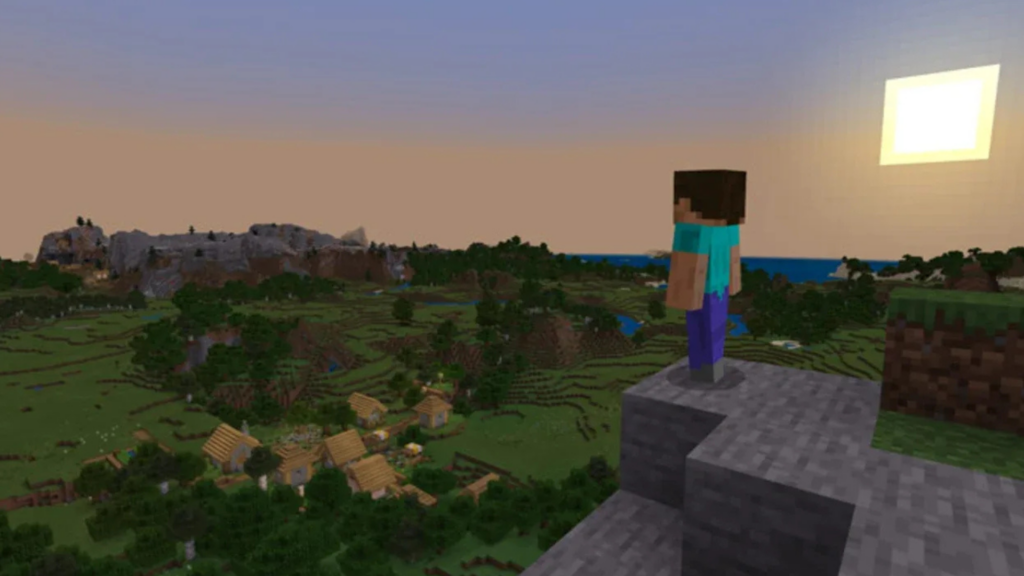
1. Minecraft — The Blocky Blueprint for “Oops, We’re an Empire now”
Remember when Minecraft was just a Java applet that looked like a fever dream from 2009? Markus Persson (“Notch”) was basically messing around with infinite worlds made of dirt cubes. No story. No goals. Just punch a tree and don’t die at night.
Fast-forward: 300+ million copies sold, a movie no one asked for, and entire generations who think “redstone” is a legitimate career path. It’s the game that proved “early access” could mean “permanent state of chaos.” Literal content creator families are fed thanks to this game.
Ironically, it’s now owned by Microsoft, the least indie entity on planet Earth. But the roots? Pure garage-band coding and a single forum post.
2. Among Us — The Game That Died, Came Back as a Zombie, Then Conquered TikTok
Let’s pour one out for Among Us. Released in 2018 to absolutely no fanfare. Like, negative fanfare. The developers at Innersloth had moved on to other projects because literally 40 people were playing at peak.
Then 2020 happened. A random Twitch streamer sneezed in its direction, and suddenly “Red is sus” became the most overused phrase in human history. 500 million downloads. Political memes. An Among Us themed Rick and Morty episode. All from a free mobile game about a murderous space egg.
Sarcastic lesson: Sometimes success is just being in the right plague at the right time.
3. Fall Guys — Where Bean Physics Became a Global Phenomenon
Picture this: a tiny UK studio called Mediatonic decides to make a battle royale… but with jellybean-shaped idiots flopping through Wipeout-style obstacle courses. The pitch meeting must have involved several energy drinks and a lobotomy.
Launched in 2020 as a PS Plus freebie. Within 24 hours, servers melted. Within a week, everyone you knew had a pink bean with a pineapple hat. It sold 50 million copies in two months. Then Epic Games bought it and made it free, because of course they did.
The takeaway: Nothing says “indie spirit” like selling out to Fortnite money. But we still love the clumsy beans.
4. Hello Neighbor — The Stealth Game That Broke Physics and Patience
Here’s a game that started as a tiny alpha on GameJolt with a single creepy AI neighbor who learned your hiding spots. Dynamic AI? In an indie game? Preposterous. The developer, Dynamic Pixels, basically said, “What if Home Alone but the Wet Bandits had a doctorate in psychological warfare?”
It became a YouTube let’s-play goldmine because watching someone get caught by a hyper-intelligent bald man in a sweater never gets old. Since then: sequels, prequels, novels, and animated series. All from a neighbor who just wanted you to stay off his lawn.
The final game was buggy as sin, but nobody cared. Buggy + creepy = “charming” if you sell enough merchandise.
5. Plants vs. Zombies — The Tower Defense Game That Grew Brains
Before it was a memetic empire, Plants vs. Zombies was a passion project by George Fan, a solo developer who just really liked gardening and Desktop Tower Defense. He built it in a tiny apartment, drew the first plants on sticky notes, and somehow convinced PopCap (then a small indie publisher) to let him make a game where sunflowers produce currency.
Released in 2009. It became a sleeper hit so massive that your grandmother still has it on her iPad. Sequels, spin-offs, a third-person shooter (Garden Warfare), and enough plush Peashooters to fill a greenhouse. All from the question: “What if zombies attacked your lawn, and your only defense was botany?”
Nothing says “indie origins” like being bought by Electronic Arts and turned into a free-to-play mobile monstrosity. But the original? Pure garage-band genius with sunflower jazz.
6. Stardew Valley — One Guy’s Revenge Against His Own Burnout
Eric Barone (ConcernedApe) spent four and a half years alone in a room coding, drawing, composing music, and writing dialogue for a farming game because Harvest Moon disappointed him. That is either dedication or a cry for help.
Released in 2016. Sold 20+ million copies. Became the ultimate “quit your job and touch grass” simulator. It’s now a cultural touchstone for millennials with anxiety. And the best part? He’s still updating it for free. No microtransactions. No battle pass. Just a man and his pixelated parsnips.
If you want to make a fortune, be aggressively antisocial and very, very petty about farming mechanics.
7. Angry Birds — The Sling-Shot That Refused to Stay in the Nest
Rovio was a tiny Finnish studio that had made 51 failed games. Fifty-one. They were running on fumes, desperation, and probably reindeer coffee. Then a designer named Jaakko Iisalo drew some angry, wingless round birds with expressive eyebrows. No game. Just the characters.
They slapped those birds into a slingshot physics puzzle game, priced it at 99 cents, and released it in 2009 for iOS. The rest is cartoon violence history. 12 billion downloads (yes, billion with a B). Theme parks, movies, plush toys, cookbooks, and a level of cultural saturation that made Minecraft look like a niche hobby.
If at first you don’t succeed, fail 51 more times, then put a red circle with a unibrow in a slingshot.
8. Undertale — The RPG That Bullied You Into Being Nice
Toby Fox made most of Undertale using RPG Maker and a dream. And by “dream,” we mean “a deep desire to deconstruct every JRPG trope while making you feel terrible about killing a skeleton named Papyrus.”
It was a Kickstarter in 2013 that asked for $5,000. Got $51,000. Then it launched in 2015 and became a phenomenon — not just in sales (over 3.5 million), but in fandom. Fan art. Fan music. Fan theories about the “Gaster” mystery that still haven’t been solved. It even got a full orchestral concert tour.
The game literally tells you not to play it. And that made everyone play it more.
9. Cuphead — The Rubberhose Revenge Fantasy
“Let’s make a run-and-gun game where every single frame is hand-drawn on paper, in the style of 1930s cartoons, and we’ll refuse to use any digital shortcuts.” That sentence should have gotten the developers at Studio MDHR institutionalized. Instead, they mortgaged their houses. Yes, literally.
Seven years of development. Tens of thousands of animation frames. One bajillion player deaths. Then it launched in 2017 and sold over 6 million copies, won a Grammy for its jazz soundtrack, and got a Netflix show. All because two brothers refused to trace a single line.
Indie success is 10% talent and 90% willingness to lose your home.
10. Doki Doki Literature Club! — The Dating Sim That Needs Therapy
Team Salvato — mainly one guy, Dan Salvato — made what looks like a saccharine anime dating sim. Cute girls. Poems. School festivals. Then about two hours in, it turns into a psychological horror game that permanently scars you. No warning. No mercy.
Released for free on Steam in 2017. Became a viral sensation. Downloaded over 15 million times. It was so effective that “Just Monika” became a meme that transcended gaming. The game explicitly tells you it’s not for children or the easily disturbed, which, of course, meant every teenager on Earth immediately played it.
Sometimes the scariest indie game is the one that pretends to be sweet. Also, delete Monika. You know why.
Wait, Did We Forget Any?
Honorable mention to Terraria (2D Minecraft with more screaming), Vampire Survivors (the $3 game that broke your dopamine receptors), Hades (roguelite + daddy issues = game of the year), Hollow Knight and Phasmophobia (four friends screaming at a ghost that doesn’t exist).
The Uncomfortable Truth About “Making It Big”
So these are the top 10 Indie Games That Accidentally Took Over the World. Here’s the part no successful indie dev puts on their inspirational Twitter thread: most of these games succeeded because of luck, timing, a YouTuber with nothing better to play, or a global pandemic that trapped everyone indoors. Among Us was dead for two years. Fall Guys almost cancelled. Minecraft was a hobby project.
So if you’re making your own weird little game right now, congratulations — you’re in the same garage these guys started in. Will you be the next Minecraft? Probably not. But hey, neither did the other games they made before these.
Now go punch a tree or accuse a crewmate. The world is waiting to be mildly annoyed by your creation. If you’re interested in checking some of these titles out, click here to visit the Steam store.